Medical leave and job protection rights La Canada Flintridge You Need To Know

Many California employees worry that taking medical leave could cost them their job. The truth is federal and California laws provide strong protections against termination for eligible workers who need time off for health reasons. Understanding your rights under FMLA, CFRA, and related statutes empowers you to take necessary leave without fear of job loss.
Table of Contents
- Foundations And Eligibility Of Medical Leave
- Special Provisions For Pregnancy And Disability
- Interaction Of Paid Benefits And Job Protection
- Job Security And Employer Limitations During Medical Leave
- Legal Protections Against Retaliation
- Recent Legislative Updates Affecting Medical Leave
- Practical Steps For Employees In La Canada Flintridge
- Protect Your Rights With Expert Employment Law Support
- Frequently Asked Questions
Key takeaways
| Point | Details |
|---|---|
| Federal and state laws protect your job | FMLA and CFRA provide 12 weeks of unpaid, job-protected medical leave annually for eligible employees. |
| Pregnancy gets special protection | California’s PDLL offers 4 months of job-protected leave for pregnancy-related disabilities. |
| Retaliation is illegal | Employers cannot lawfully fire, demote, or penalize you for taking protected medical leave. |
| 2026 laws expand protections | Recent legislation broadens leave eligibility to crime victims and strengthens anti-retaliation provisions. |
| Document everything | Keep records of requests, approvals, and any adverse treatment to protect your legal rights. |
Foundations and eligibility of medical leave
The Family and Medical Leave Act (FMLA) and California Family Rights Act (CFRA) form the backbone of medical leave protections for workers. FMLA provides 12 weeks of unpaid leave annually with eligibility requiring 12 months of employment and 1,250 hours worked. CFRA offers similar 12-week protection but covers smaller employers with 5 or more employees.
You qualify for protected leave if you’ve worked at least 12 months for your employer and logged 1,250 hours during that period. FMLA applies to companies with 50 or more employees within a 75-mile radius, while CFRA’s broader reach includes businesses with just five workers. This difference matters significantly for La Canada Flintridge employees working at smaller local companies.
Both laws let you take leave for your own serious health condition, to care for a family member with a serious condition, or for childbirth and bonding. CFRA expands the definition of family to include grandparents, grandchildren, and siblings, giving California workers more flexibility than federal law alone. Understanding which law applies to your situation ensures you request the correct leave type.
Key eligibility factors include:
- Employer size (50+ for FMLA, 5+ for CFRA in California)
- Your work history (12 months tenure, 1,250 hours worked)
- Reason for leave (serious health condition, family care, or childbirth)
- Geographic proximity for FMLA (within 75 miles of 50+ employees)
Knowing these requirements helps you confidently request protected medical leave. If you work for a smaller employer in La Canada Flintridge, CFRA likely covers you even if FMLA does not. Check both federal FMLA leave rights and California CFRA leave coverage to determine your protections. Employers sometimes incorrectly deny leave based on misunderstanding these laws, so verify your eligibility independently.
Pro Tip: Document your hire date and hours worked before requesting leave. Payroll records prove eligibility if your employer challenges your request.
If you believe your employer violated your leave rights, understanding FMLA and CFRA leave violations Covina can help you recognize similar patterns in your workplace.
Special provisions for pregnancy and disability
California’s Pregnancy Disability Leave Law (PDLL) provides distinct protections beyond CFRA and FMLA. Pregnant employees may take 4 months of job-protected leave for pregnancy disabilities under state law. This leave covers conditions like severe morning sickness, prenatal care, childbirth recovery, and pregnancy complications.
PDLL applies to employers with five or more employees, matching CFRA’s coverage threshold. The law protects your job during pregnancy-related disabilities even before childbirth occurs. After delivery, you can use CFRA leave for baby bonding, effectively extending your total protected time off. This sequential use of leave types maximizes job protection during pregnancy and early parenthood.
The Fair Employment and Housing Act (FEHA) requires employers to provide reasonable accommodations for disabled employees, including pregnancy-related limitations. Accommodations might include modified duties, flexible schedules, or temporary transfers to less strenuous positions. These adjustments help you continue working safely without triggering leave until medically necessary.
Important distinctions for pregnancy leave:
- PDLL runs separately from CFRA, potentially giving you 16 weeks total (4 months PDLL plus 12 weeks CFRA)
- Pregnancy disability leave begins when your doctor certifies you’re unable to work due to pregnancy
- Baby bonding under CFRA starts after pregnancy disability leave ends
- Employers must hold your job or provide a comparable position upon return
Pro Tip: Request medical certification early in pregnancy if complications arise. Clear documentation from your healthcare provider strengthens your leave request and prevents disputes.
Understanding maternity leave laws California helps you plan the full scope of your time off. Coordinate with HR to map out PDLL, CFRA, and any paid benefits to maximize both income replacement and job protection. Visit California pregnancy disability leave resources for detailed guidance on requesting and using this leave.
Interaction of paid benefits and job protection
Many employees confuse wage replacement programs with job-protected leave. California’s State Disability Insurance (SDI) and Paid Family Leave (PFL) provide income during time off but don’t guarantee your job remains available. SDI pays up to 52 weeks of benefits for your own disability, while PFL offers up to eight weeks of wage replacement when caring for a seriously ill family member or bonding with a new child.
FMLA and CFRA guarantee job protection but generally provide unpaid leave. You can combine these protections by using SDI or PFL for income while FMLA/CFRA secures your position. This coordination requires careful planning because the benefit programs and job protection laws have different eligibility rules and durations.

| Benefit Type | Duration | Job Protection | Income Replacement |
|---|---|---|---|
| FMLA/CFRA | 12 weeks per year | Yes | No (unpaid) |
| PDLL | 4 months | Yes | No (unpaid) |
| State Disability Insurance | Up to 52 weeks | No | 60-70% of wages |
| Paid Family Leave | Up to 8 weeks | No | 60-70% of wages |
Applying for state benefits requires separate filings with California’s Employment Development Department (EDD). Submit your claim within 49 days of your disability start date to avoid benefit delays. Your doctor must certify your condition, and EDD processes claims within 14 days of receiving complete documentation.
Pro Tip: File for SDI or PFL immediately when your leave begins. Delays in applying can cost you weeks of income replacement even if approved later.
Key points about benefit coordination:
- SDI and PFL applications go through EDD, not your employer
- FMLA/CFRA requests go to your employer with medical certification
- You can receive SDI payments while on job-protected FMLA/CFRA leave
- Employer-provided sick leave or vacation can supplement state benefits
If you experience issues accessing Disability Insurance California, legal assistance can help you navigate claim denials or employer interference. Understanding the distinction between income replacement and job security helps you plan financially while protecting your employment.
Job security and employer limitations during medical leave
Employers face strict limits on termination and adverse actions during your medical leave. The law prohibits firing you because you took protected leave. California Civil Rights Department guarantees job reinstatement to your same position or a comparable role with equivalent pay, benefits, and working conditions.
If your company conducts layoffs during your leave, those decisions must be completely independent of your medical absence. Employers must prove they would have eliminated your position regardless of your leave status. Documentation showing layoff criteria and business necessity becomes critical in these situations.
The Worker Adjustment and Retraining Notification (WARN) Act requires 60 days advance notice before mass layoffs or plant closures affecting 50 or more workers at a single site. This protection applies during medical leave, giving you the same notice rights as active employees. Your leave status cannot exclude you from WARN Act coverage or severance benefits.
Your reemployment rights include:
- Return to the same job you held before leave, with no loss of seniority
- Placement in an equivalent position if your original role was eliminated for legitimate business reasons
- Restoration of all benefits, including health insurance, without new waiting periods
- Protection from retaliation or discrimination for using leave rights
| Protection Type | Employer Obligation | Employee Right |
|---|---|---|
| Job reinstatement | Must restore same or comparable position | Return to equivalent role, pay, and benefits |
| Layoff procedures | Cannot target employees on medical leave | Same consideration as active employees |
| WARN Act notice | 60 days notice for mass layoffs | Advance warning and severance eligibility |
| Health benefits | Continue coverage during leave | Maintain insurance without new waiting periods |
Employers sometimes claim business restructuring necessitated eliminating your position during leave. Scrutinize this explanation carefully. If similarly situated employees kept their jobs while you faced termination, discrimination may be occurring. Review California Civil Rights Department job protections to understand your reinstatement rights fully.
Legal protections against retaliation
Retaliation for taking medical leave violates California law, yet it happens in both obvious and subtle ways. California law forbids demotions, exclusion, and schedule changes after medical leave. Obvious retaliation includes termination, demotion, or pay cuts directly following your return. Subtle forms are harder to spot but equally illegal.
Subtle retaliation signs include:
- Sudden negative performance reviews after previously positive evaluations
- Exclusion from important meetings or projects you handled before leave
- Unfavorable schedule changes or shift assignments
- Loss of preferred clients, accounts, or responsibilities
- Cold or hostile treatment from supervisors or coworkers
Employers must maintain strict confidentiality about your medical leave reasons. Sharing details about your health condition with coworkers or using your medical situation against you violates privacy protections. You control who knows about your medical needs beyond HR and direct supervisors who process leave requests.
If retaliation occurs, you have legal recourse through the California Civil Rights Department or court action. Document every retaliatory act with dates, witnesses, and specific details. Save emails, text messages, and performance reviews that show changed treatment after your leave. This evidence becomes crucial if you need to file a complaint or lawsuit.
Recognizing signs of workplace retaliation helps you respond quickly to protect your rights. Connect patterns of negative treatment to your leave timing. If you experienced pregnancy discrimination medical leave, similar protections apply to other medical leave types.
Pro Tip: Keep a detailed journal of workplace interactions after returning from leave. Note who said what, when, and any witnesses present. Contemporary records are more credible than later recollections.
Learn more about California leave retaliation protections to understand how courts evaluate these claims. Quick action matters because retaliation often escalates if unchecked.
Recent legislative updates affecting medical leave
California continuously strengthens medical leave protections through new legislation. AB 406 expands paid sick leave to cover crime victims and their family members starting January 2026. This law broadens eligibility beyond traditional illness to include time off for legal proceedings, medical treatment, and mental health counseling related to crimes.
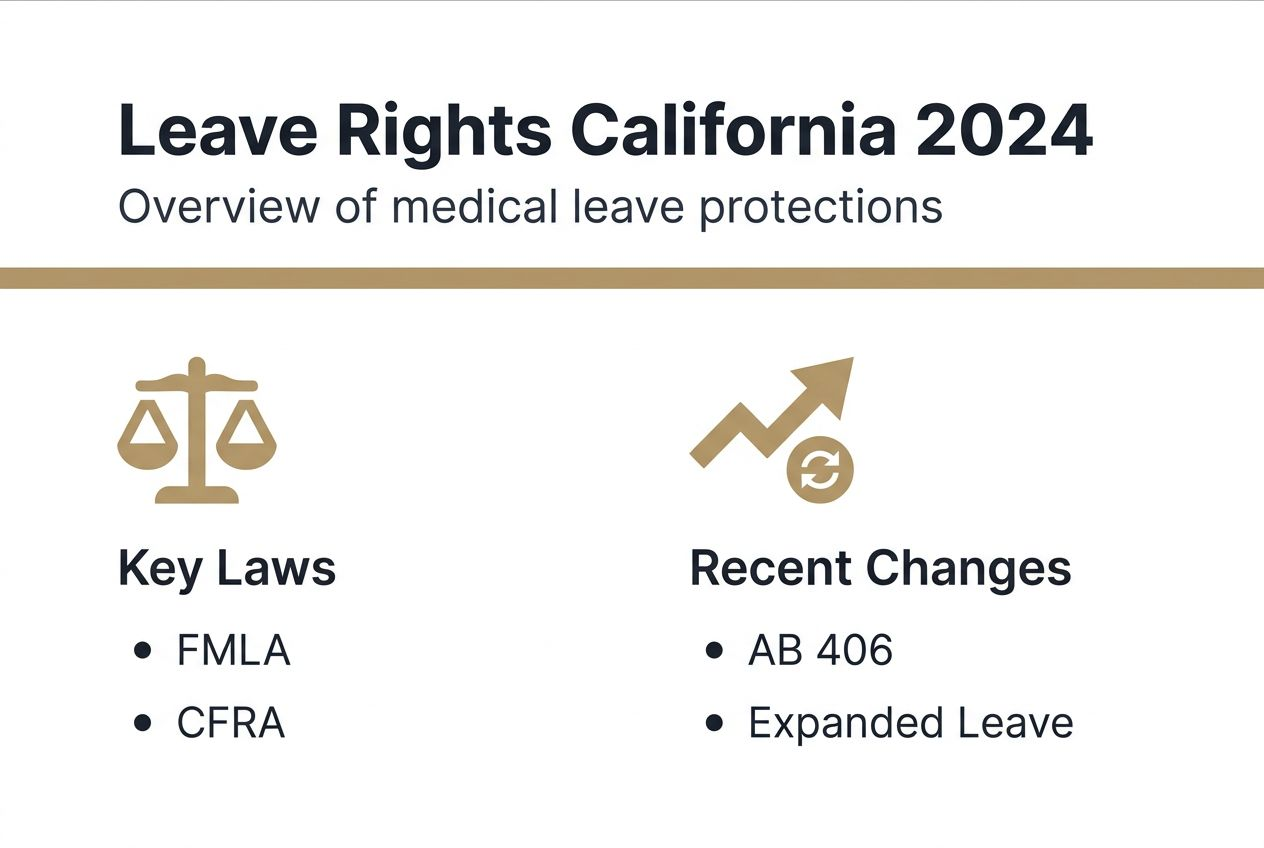
The California Civil Rights Department issued updated notices for 2026 requiring employers to inform workers about expanded survivor protections. Victims of domestic violence, sexual assault, and stalking now have explicit job-protected leave rights. These changes mandate workplace policy updates and new employee notices throughout 2026.
Key 2026 legislative changes include:
- Expanded paid sick leave eligibility for crime victims and their families
- Enhanced job protections for survivors of violence and abuse
- Stricter employer notice requirements about leave rights
- Increased penalties for retaliation or leave interference
Employers must update handbooks, posters, and onboarding materials to reflect these changes. As an employee, verify your workplace displays current 2026 notices about your leave rights. Outdated information may cause you to miss benefits you’re now eligible to claim.
Understanding California sick leave laws and maternity leave laws California in their current form ensures you don’t rely on obsolete information. Laws evolve quickly, and 2026 brought significant expansions worth knowing.
Pro Tip: Request a copy of your employer’s updated 2026 leave policy. Compare it against current law to spot gaps or outdated provisions that shortchange your rights.
Staying informed about 2026 California leave law updates gives you an advantage when requesting time off or challenging denials. These protections only help if you know they exist and how to invoke them.
Practical steps for employees in La Canada Flintridge
Successfully using medical leave rights requires strategic preparation and careful documentation. Follow these steps to protect your job while taking necessary time off.
- Verify your eligibility by checking your employer’s size, your tenure, and hours worked in the past 12 months.
- Review your company’s leave policy alongside state and federal laws to understand all available protections.
- Provide written notice to your employer as soon as you know you’ll need leave, ideally 30 days in advance when possible.
- Obtain medical certification from your healthcare provider documenting your condition and need for time off.
- Submit all required paperwork promptly, keeping copies of everything you provide to your employer.
- File for SDI or PFL benefits through EDD within 49 days of your leave start date.
- Maintain communication with your employer according to their policy while respecting your privacy rights.
- Document any negative treatment, policy violations, or retaliation you experience during or after leave.
Keep a dedicated folder with all leave-related documents including:
- Your initial leave request and employer’s response
- Medical certifications and doctor’s notes
- Correspondence with HR or your supervisor about leave
- Pay stubs and benefits statements during your absence
- Return-to-work communications and any job changes upon return
Understanding your employer’s specific policies matters because companies can offer more generous leave than law requires. Some employers provide paid leave, extended durations, or broader eligibility. Never assume the legal minimum is your only option.
Pro Tip: Send important leave requests and notices via email or certified mail to create a paper trail. Verbal requests are harder to prove if disputes arise later.
If you face retaliation, wrongful termination, or leave denial, consult qualified legal counsel immediately. Time limits apply to filing complaints, so prompt action protects your rights. Learn about hiring an employment lawyer to evaluate whether professional representation would benefit your situation.
Protect your rights with expert employment law support
Navigating medical leave laws and job protection rules can feel overwhelming when you’re dealing with health challenges. Expert legal guidance ensures you understand your full range of rights and helps you respond effectively to violations. Huprich Law specializes in representing California employees facing discrimination, retaliation, and wrongful termination related to medical leave.
Our firm serves workers throughout Los Angeles County, including La Canada Flintridge, with focused expertise in employment law protections Los Angeles. We understand how employers sometimes violate leave rights and what evidence proves your case. Whether you need advice on requesting leave or representation after termination, experienced counsel makes a critical difference.
Explore reasons to hire an employment lawyer and review our employee rights handbook California for comprehensive guidance on workplace protections. Taking action early prevents small violations from escalating into job loss.
Frequently asked questions
Can I be fired for taking medical leave if my employer claims a business reason?
Employers cannot lawfully terminate you solely for taking protected medical leave. Any termination during your leave must result from legitimate business reasons completely unrelated to your health absence. Your employer bears the burden of proving the decision would have occurred regardless of your leave status.
What if my employer denies my medical leave request due to company size?
CFRA extends job-protected medical leave to California employers with just five or more employees, broader coverage than federal FMLA. Verify your employer’s size and check eligibility under both state and federal law. Challenge incorrect denials based on outdated or wrong information about coverage thresholds.
Does California law require paid medical leave during FMLA/CFRA leave?
FMLA and CFRA guarantee job protection but only require unpaid leave. Wage replacement comes from separate programs like State Disability Insurance, Paid Family Leave, or employer-provided paid leave policies. You can often combine unpaid job-protected leave with paid benefits for both income and job security.
How can I document retaliation if my employer treats me unfairly after medical leave?
Keep detailed records of all workplace interactions, changes in duties, performance reviews, and communications after returning from leave. Note dates, times, witnesses, and specific statements or actions that show negative treatment. Save emails, text messages, and any written documentation showing changed circumstances linked to your leave timing.
Recommended
- FMLA and CFRA Leave Violations in Covina You Need To Know
- Pregnancy Discrimination in Chino: What You Need To Know
- Montclair Wrongful Termination After Medical Leave You Need To Know
- Employment Law Protections for LA Workers You Need To Know
https://huprichlaw.com/medical-leave-job-protection-rights-la-canada-flintridge/?fsp_sid=2654


Comments
Post a Comment