Unpaid Commission In Rancho Cucamonga You Need To Know

You closed the deal, hit your numbers, and earned your commission. Then payday arrives and the money isn’t there. Your employer offers vague explanations about policy changes or delayed processing. You might think commissions are discretionary bonuses employers can withhold at will, but California law tells a different story. Earned commissions are legally protected wages that cannot be forfeited or reduced arbitrarily. This guide explains your rights as a sales employee in Rancho Cucamonga and shows you how to recover what you’ve earned.
Table of Contents
- Why Commissions Are Protected Wages Under California Law
- Common Causes And Examples Of Unpaid Commission Disputes In Rancho Cucamonga Sales Roles
- How To Legally Pursue Unpaid Commissions In California: Steps And Potential Remedies
- Understanding Your Rights And Protections Specific To Rancho Cucamonga Sales Jobs
- How Huprich Law Can Help With Your Unpaid Commission Dispute In Rancho Cucamonga
Key takeaways
| Point | Details |
|---|---|
| Commissions are wages | Once earned under your agreement, commissions receive the same legal protections as hourly pay or salary |
| Written agreements required | California law mandates written commission plans detailing how you earn, calculate, and receive payment |
| Multiple remedies available | You can pursue wage claims, civil lawsuits, waiting time penalties, and attorney fees for unpaid commissions |
| Local market context | Real estate commissions average 5.47% in San Bernardino County, representing substantial earned income |
| Time limits apply | You have 3 to 4 years to file claims, making prompt action essential for recovery |
Why commissions are protected wages under California law
California treats commissions differently than many employees realize. The moment you satisfy the conditions in your written commission agreement, that money becomes wages you’ve earned. California Labor Code requires written commission agreements detailing how commissions are earned, calculated, and paid. Once earned under the plan, commissions are wages that cannot be forfeited, reduced retroactively, or subjected to unwritten conditions.
This protection stems from several Labor Code sections working together. Section 200 defines wages to include commissions. Section 204 establishes payment timing requirements. Section 221 prohibits employers from collecting or deducting wages already earned. Section 2751 mandates the written agreement itself. These provisions create a comprehensive framework ensuring sales employees receive compensation they’ve legitimately earned.
Your written commission agreement serves as the contract defining when commissions vest. The agreement must specify the method of computation, the transaction events triggering payment, and the timing of commission payments. Employers cannot unilaterally change these terms retroactively to avoid paying commissions on deals you closed under the original agreement. If your employer tries to impose new conditions after you’ve already earned the commission, they’re violating California law.
The unique nuances of California employment law provide stronger protections than federal standards. While federal law offers baseline wage protections, California goes further by requiring written agreements and prohibiting forfeiture of earned commissions. This means sales employees in Rancho Cucamonga enjoy protections unavailable in many other states.
Pro Tip: Request a copy of your commission agreement on your first day. Keep it with your personal records along with documentation of every sale, client, and transaction that triggers commission payments under the plan’s terms.
Understanding these protections empowers you to recognize when an employer crosses legal boundaries. If your employer claims commissions are discretionary or subject to approval after you’ve met the written plan’s requirements, they’re misrepresenting California law. Earned commissions are your property, protected with the same force as any other wages.
Common causes and examples of unpaid commission disputes in Rancho Cucamonga sales roles
Unpaid commission disputes typically arise from several predictable scenarios. Employers may delay payments beyond the agreed schedule, hoping employees won’t pursue the matter. They might miscalculate commissions by applying incorrect rates or excluding qualifying transactions. Some employers deny commissions entirely, claiming deals didn’t meet unwritten criteria never mentioned in the commission agreement.
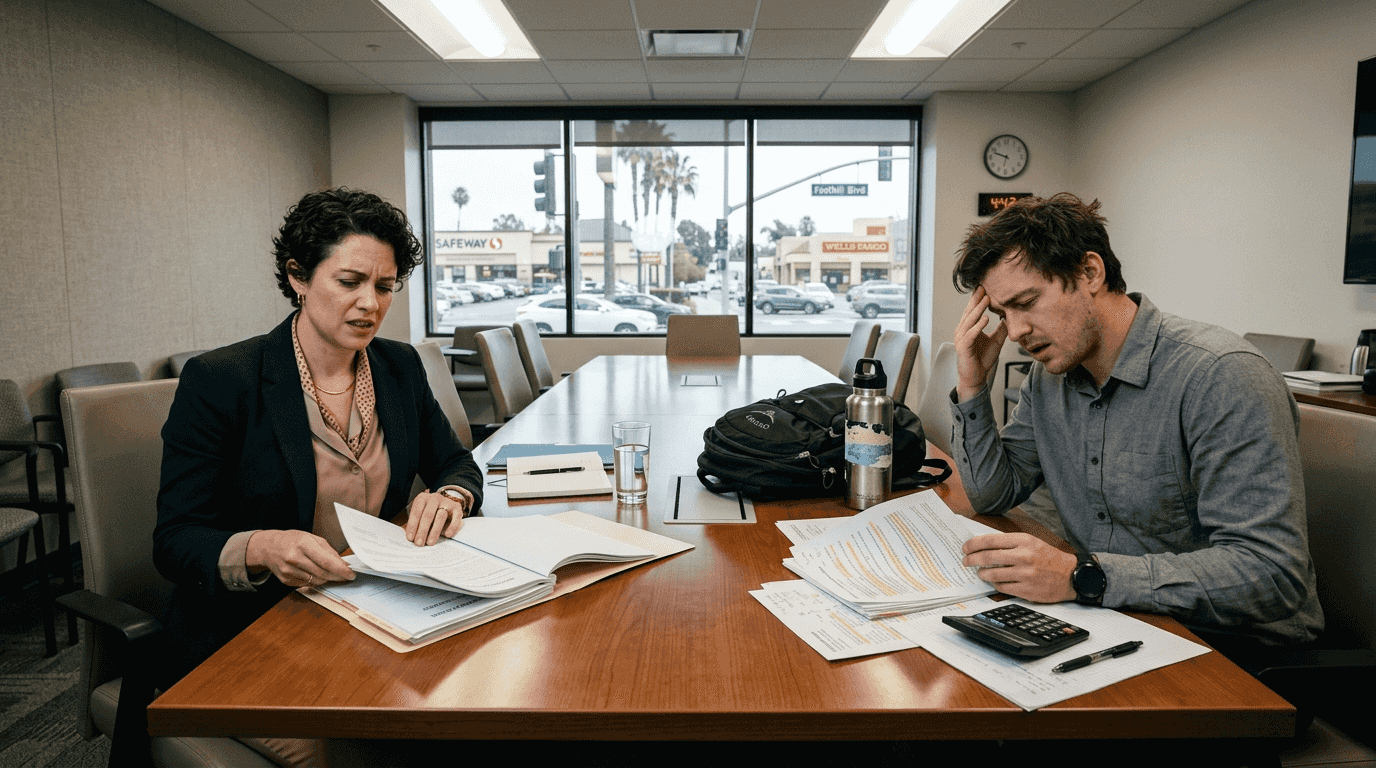
The financial stakes in Rancho Cucamonga sales roles can be substantial. Local real estate commissions average 5.47% in the San Bernardino area, implying typical commissions around $44,300 for median priced homes. When an employer withholds this level of compensation, it creates immediate financial hardship for sales employees who’ve already invested time and effort closing deals.
Consider these common dispute scenarios:
- Employer changes commission rates or calculation methods after you close deals but before payment
- Company claims budget constraints or poor quarterly performance justify withholding earned commissions
- Employer terminates you and refuses to pay commissions on deals pending at termination
- Management imposes new approval requirements or quality standards not specified in your written agreement
- Employer deducts chargebacks or customer refunds from commissions on unrelated transactions
Retroactive policy changes represent a frequent violation. An employer might announce that all commissions now require manager approval, then deny approval for deals closed before the policy existed. California law prohibits this practice because it attempts to forfeit wages already earned under the previous agreement terms. The written agreement in effect when you earned the commission governs your right to payment.
Unclear or incomplete commission agreements create fertile ground for disputes. If your agreement uses vague language about when commissions are “earned” versus when they’re “paid,” employers may exploit that ambiguity. Employment law statistics in Rancho Cucamonga show wage theft remains a persistent problem, with commission disputes representing a significant portion of claims.
Pro Tip: Maintain a spreadsheet tracking every transaction that should generate commission under your agreement. Include dates, client names, sale amounts, and commission calculations. This documentation becomes crucial evidence if disputes arise.
Some employers use termination as an excuse to avoid commission payments. They may fire you immediately after a strong sales period, then claim commissions aren’t payable because you’re no longer employed. California law rejects this reasoning. If you earned commissions before termination under your written agreement, those wages remain payable regardless of your employment status.
How to legally pursue unpaid commissions in California: steps and potential remedies
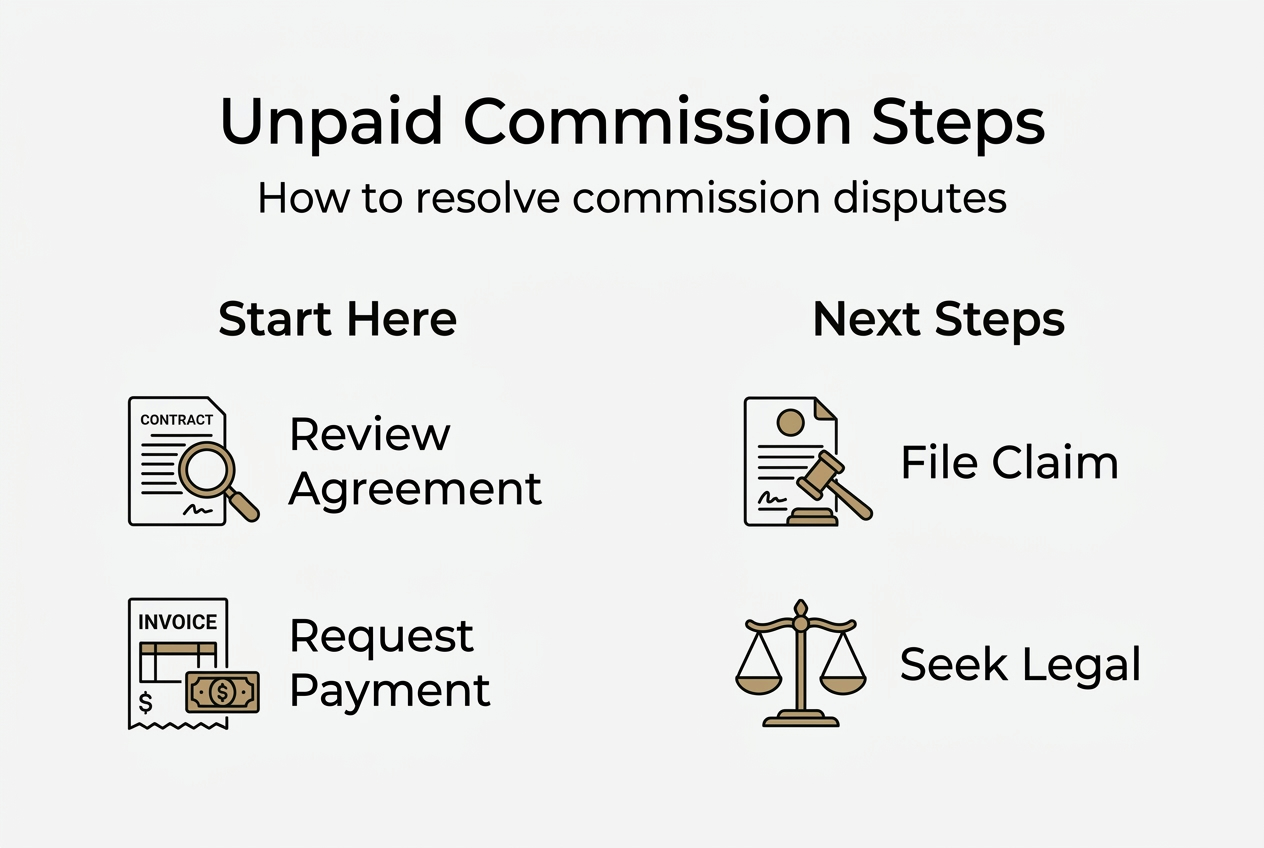
Recovering unpaid commissions requires strategic action following specific legal procedures. Start by reviewing your written commission agreement to confirm you satisfied all conditions for earning the disputed commissions. Document the transactions, dates, amounts, and calculations supporting your claim. This foundation proves essential whether you pursue administrative remedies or litigation.
Follow these steps to address unpaid commissions:
- Submit a written demand to your employer detailing the unpaid commissions, citing specific agreement provisions, and requesting immediate payment with accounting
- Allow reasonable time for response, typically 10 to 15 business days, while documenting all communications
- File a wage claim with the California Division of Labor Standards Enforcement if your employer refuses payment or offers inadequate resolution
- Consult an employment attorney to evaluate whether civil litigation offers advantages over the administrative process
- Gather supporting evidence including pay stubs, commission statements, sales records, emails, and witness information
- Meet all filing deadlines to preserve your claims and maximize available remedies
California provides multiple remedies for unpaid commissions. Resolution steps include filing DLSE wage claims or civil suits, with penalties including waiting time penalties up to 30 days’ wages, liquidated damages, PAGA penalties, and attorney fees. Waiting time penalties apply when employers willfully fail to pay all wages due at termination, adding your daily wage rate for each day of delay up to 30 days.
Liquidated damages under Labor Code Section 1194 can double your recovery for unpaid minimum wage or overtime violations. While standard commission disputes may not qualify, cases involving misclassification or minimum wage issues could. PAGA claims allow you to pursue civil penalties on behalf of yourself and other affected employees, creating additional leverage in settlement negotiations.
Compare your legal options:
| Remedy | Advantages | Disadvantages | Timeline |
|---|---|---|---|
| DLSE Wage Claim | No attorney required, no filing fees, investigator assigned | Limited discovery, slower process, no jury trial | 6 to 18 months |
| Civil Lawsuit | Full discovery, jury trial option, broader remedies, attorney representation | Requires attorney, court filing fees, more complex | 12 to 36 months |
| Settlement Negotiation | Faster resolution, certainty, lower costs | May recover less than full amount, no precedent set | 1 to 6 months |
Attorney fees provisions in California wage laws create powerful incentives for employers to settle legitimate claims. If you prevail in a wage claim or lawsuit, the employer typically must pay your attorney fees and costs. This levels the playing field, allowing employees to retain experienced counsel without upfront payment through contingency arrangements.
Pro Tip: Send your written demand via email and certified mail to create clear proof of delivery and timing. Keep copies of all correspondence and note every phone conversation with dates, times, and participants.
The unpaid wages guide for California explains additional remedies and procedures. Consider that wage claims filed with DLSE proceed through an administrative hearing before a hearing officer, with appeals available to superior court. Civil lawsuits filed directly in court offer more procedural options but require navigating complex litigation rules. Your choice depends on claim size, evidence strength, and strategic considerations an attorney can help evaluate.
Pursuing recovering unpaid wages requires understanding limitation periods and filing deadlines. Missing these deadlines can permanently bar your claims, making prompt action essential.
Understanding your rights and protections specific to Rancho Cucamonga sales jobs
California’s statewide labor laws govern commission disputes in Rancho Cucamonga without local exceptions or variations. The Labor Code provisions protecting earned commissions apply uniformly throughout the state, meaning sales employees in Rancho Cucamonga have identical rights to those in Los Angeles, San Francisco, or any other California city. No local ordinances modify these protections or create additional requirements.
The local real estate market context provides useful perspective on typical commission amounts but doesn’t alter legal rights. Whether you earn $5,000 or $50,000 in commissions, the same legal protections apply. The written agreement governs when commissions vest and become payable wages, regardless of industry norms or local market conditions.
Key employee protections under California law include:
- Right to written commission agreement before performing commission based work
- Protection against retroactive changes reducing or eliminating earned commissions
- Guaranteed payment of all earned wages within specific timeframes at termination
- Access to itemized wage statements showing commission calculations and payments
- Right to inspect payroll records and commission documentation
- Protection against retaliation for questioning commission payments or asserting wage rights
California employment law on unpaid wages extends beyond commission specific provisions to encompass broader wage and hour protections. These protections work together, ensuring sales employees receive minimum wage for all hours worked even when commission earnings fall short, proper overtime compensation when applicable, and meal and rest break compliance.
Sales employees sometimes face pressure to accept partial commission payments or sign releases waiving claims to remaining amounts. California law strictly limits such waivers. You cannot validly waive claims to wages already earned, and any release signed under duress or without full information may be voidable. Before signing any settlement or release, consult an attorney to understand what rights you’re surrendering.
Finding experienced legal support matters when substantial commissions are at stake. Employment lawyers in Rancho Cucamonga familiar with California wage laws can evaluate your specific situation, explain available remedies, and represent your interests through administrative or court proceedings. Most employment attorneys handling wage claims work on contingency, charging fees only if you recover compensation.
Local resources for understanding your rights include the California Labor Commissioner’s office, which provides information about filing wage claims and explains the administrative process. Bar associations offer referral services connecting you with qualified employment attorneys. Legal aid organizations may assist lower income workers with wage claims.
How Huprich Law can help with your unpaid commission dispute in Rancho Cucamonga
Navigating unpaid commission disputes requires legal expertise specific to California employment law. Huprich Law specializes in representing employees facing wage theft, including complex commission disputes across Southern California. The firm understands the employment law protections in Los Angeles and surrounding areas, bringing experience with commission agreements, wage claims, and employment litigation.
Whether you need guidance filing a DLSE claim, representation in settlement negotiations, or aggressive advocacy through trial, Huprich Law provides the focused support sales employees need. The firm works to maximize your recovery through all available remedies, including unpaid commissions, waiting time penalties, and attorney fees. There are compelling reasons to hire an employment lawyer rather than navigating these complex procedures alone.
Understanding your rights to unpaid wages in California starts with a consultation reviewing your commission agreement, employment records, and dispute circumstances. Contact Huprich Law to discuss your unpaid commission situation and explore legal options tailored to your specific case.
FAQ
What is the statute of limitations for unpaid commission claims in California?
The statute of limitations for unpaid commission claims in California is generally 3 to 4 years depending on the claim type. Written contract claims allow four years, while claims based on oral agreements or Labor Code violations typically allow three years. Filing promptly preserves your rights and maximizes available remedies including waiting time penalties.
Can my employer reduce my commission rate after I’ve earned it?
No. Once commissions are earned under a written plan, employers cannot retroactively reduce or forfeit them under California law. Your written agreement in effect when you satisfied earning conditions governs the commission amount and payment terms. Employers may prospectively change commission structures for future sales, but cannot apply new terms to deals already closed.
What steps should I take if my commission is unpaid in Rancho Cucamonga?
Review your written commission agreement to confirm you met all earning requirements. Submit a written demand to your employer requesting immediate payment with detailed accounting. If unresolved, file a wage claim with the California Labor Commissioner or consult an employment attorney about civil litigation. Understanding unpaid wages rights helps you choose the most effective legal path.
Do I still get commissions if I’m fired before the payment date?
Yes, if you earned the commissions under your agreement before termination. California law requires payment of all earned wages, including commissions, at termination or within 72 hours depending on circumstances. Employers cannot forfeit commissions simply because employment ended before the scheduled payment date. Your final paycheck must include all commissions earned under the written plan’s terms.
Can my employer require me to repay commissions on canceled deals?
It depends on your written commission agreement. If the agreement clearly states commissions are subject to chargeback upon customer cancellation or refund, and you received advance payment, repayment may be valid. However, employers cannot impose chargebacks not specified in the written agreement, and cannot deduct chargebacks from commissions on unrelated transactions without proper authorization. Review your agreement carefully and consult an attorney if facing improper deduction demands.
Recommended
- How To Find The Best Employment Lawyer In Rancho Cucamonga
- Rancho Cucamonga Employment Law Statistics You Need To Know
- Fontana Unpaid Wages & AI Surveillance: You Need To Know This
- Final Paycheck Violations in Upland – What You Need to Know
https://huprichlaw.com/resolve-unpaid-commission-disputes-rancho-cucamonga/?fsp_sid=2627


Comments
Post a Comment