What Is Workplace Harassment? You Need To Know This

Workplace harassment in California is not just a buzzword. It’s a daily reality for thousands of workers, with over 40 percent of employees reporting some form of harassment or discrimination in their careers. Most people think harassment is all about obvious threats or screaming bosses. That’s only a fraction of the story. Even a single offhand comment or visual gesture can cross the line and spark serious legal consequences that can reshape your entire workplace.
Table of Contents
- Defining Workplace Harassment In California
- Types Of Harassment And Discrimination
- Protected Characteristics And Discriminatory Practices
- Specific Forms Of Workplace Harassment
- Reporting And Legal Protections
- Legal Rights And Protections For Employees
- Statutory Protections And Legal Frameworks
- Employer Training And Prevention Requirements
- Employee Remedies And Legal Recourse
- Steps To Take If Experiencing Harassment
- Documenting And Reporting Harassment
- Formal Complaint And Legal Protections
- Protecting Yourself And Understanding Your Rights
Quick Summary
| Takeaway | Explanation |
|---|---|
| Know Your Employee Rights | California law protects workers from harassment based on various characteristics, ensuring a dignified workplace. |
| Document Incidents of Harassment | Keep detailed records of harassment incidents to support potential complaints or legal action. |
| Report Through Proper Channels | Follow your company’s reporting procedures to officially address harassment and seek resolution. |
| Seek Legal Guidance If Necessary | Consult an employment law attorney for tailored advice and support if you encounter workplace harassment. |
| Understand Anti-Retaliation Protections | Employees are legally protected from retaliation after reporting harassment, encouraging them to come forward without fear. |
Defining Workplace Harassment in California
Workplace harassment in California represents a serious violation of employee rights that can profoundly impact an individual’s professional and personal well-being. The state provides robust legal protections to ensure workers are treated with dignity and respect in their work environment.
Legal Framework of Workplace Harassment
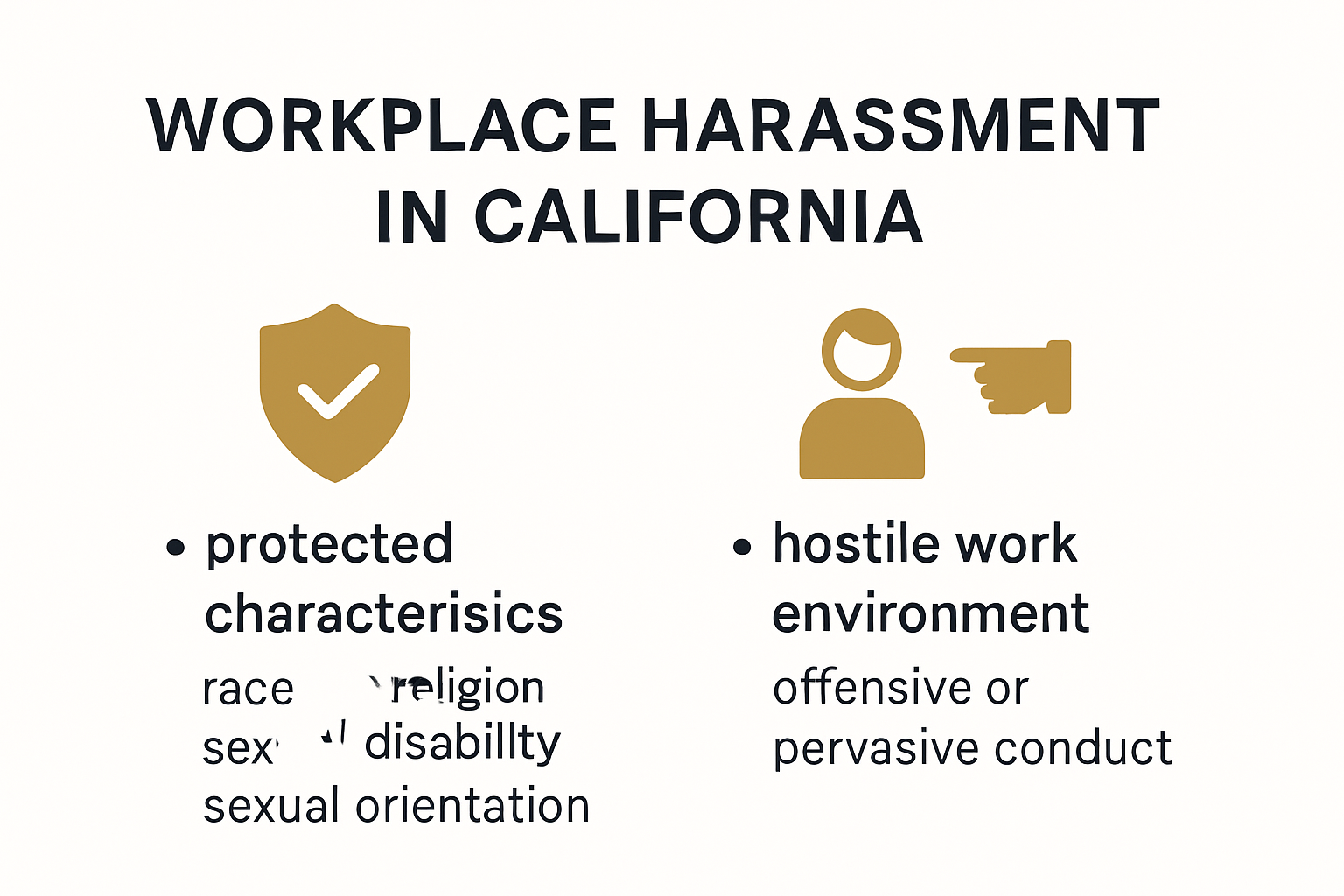
Under California law, workplace harassment is defined as unwelcome conduct targeting an employee based on protected characteristics that creates a hostile, intimidating, or offensive work environment. Our comprehensive guide on workplace harassment provides deeper insights into these complex legal standards.
The California Civil Rights Department (CRD) explicitly prohibits harassment based on multiple protected characteristics, including:
- Race and color
- Religion
- Gender and gender identity
- Sexual orientation
- National origin
- Age (40 and older)
- Disability
- Medical condition
- Genetic information
- Veteran status
Types of Workplace Harassment
Workplace harassment can manifest in various forms, extending far beyond physical misconduct. According to the U.S. Equal Employment Opportunity Commission (EEOC), harassment becomes unlawful when the conduct is severe or pervasive enough that a reasonable person would consider the work environment intimidating, hostile, or abusive.
Critical harassment types include:
- Verbal Harassment: Offensive jokes, slurs, epithets, name-calling, intimidating or derogatory comments
- Visual Harassment: Displaying offensive images, gestures, or materials that create a hostile environment
- Physical Harassment: Unwanted physical contact, blocking movement, inappropriate touching
- Sexual Harassment: Unwelcome sexual advances, requests for sexual favors, or conduct of a sexual nature
Importantly, harassment can occur between individuals of the same or different genders. The key determining factor is whether the conduct is unwelcome and creates a work environment that a reasonable person would find intimidating or offensive.
California law takes a comprehensive approach to protecting employees. The Fair Employment and Housing Act (FEHA) ensures that workers have strong legal recourse when facing harassment. This means employers can be held liable not just for direct harassment by supervisors, but also for failing to prevent or promptly address harassment when reported.
Employees experiencing workplace harassment should document incidents, report them through proper channels, and seek legal guidance to understand their rights and potential remedies. Remember, no one should endure a hostile work environment, and California’s robust legal framework stands ready to protect workers from such unacceptable treatment.
Types of Harassment and Discrimination
Workplace harassment and discrimination can take many forms, each presenting unique challenges and potential legal implications for employees in California. Understanding these different types of harassment is crucial for recognizing and addressing inappropriate workplace conduct.

Protected Characteristics and Discriminatory Practices
California law provides comprehensive protection against discrimination based on numerous characteristics. Learn more about workplace discrimination rights to fully understand the scope of legal protections available to workers.
Discriminatory practices can manifest in various ways, targeting individuals based on:
- Race and Color Discrimination: Unfair treatment or harassment based on an individual’s race, skin color, racial characteristics, or perceived racial identity
- Religious Discrimination: Negative treatment or failure to accommodate religious beliefs, practices, or observances
- Gender and Sexual Orientation Discrimination: Unequal treatment or harassment based on gender identity, sexual orientation, or gender expression
- Age Discrimination: Unfavorable treatment of workers aged 40 and older
- Disability Discrimination: Failure to provide reasonable accommodations or unequal treatment of individuals with physical or mental disabilities
Specific Forms of Workplace Harassment
Harassment extends beyond simple discrimination, creating hostile work environments through various mechanisms. According to the California Department of Justice, harassment can include:
- Sexual Harassment: Unwelcome sexual advances, requests for sexual favors, or other verbal or physical conduct of a sexual nature
- Verbal Harassment: Offensive comments, slurs, epithets, or derogatory language targeting protected characteristics
- Physical Harassment: Unwanted physical contact, intimidating gestures, or actions that create a threatening environment
- Visual Harassment: Displaying offensive images, symbols, or materials that create a hostile work environment
Reporting and Legal Protections
The California Department of Industrial Relations emphasizes that all workers are protected from harassment and discrimination, regardless of immigration status. Employees experiencing workplace harassment have several critical options:
- Document all instances of harassment or discriminatory behavior
- Report incidents through official workplace channels
- File a complaint with the appropriate state or federal agency
- Seek legal consultation to understand full rights and potential remedies
It is important to note that harassment becomes legally actionable when it is severe or pervasive enough to create a work environment that a reasonable person would find intimidating, hostile, or offensive. This means isolated incidents may not always constitute legal harassment, but pattern of behavior can provide grounds for legal action.
Employees should remember that retaliation for reporting harassment or discrimination is strictly prohibited. California law provides robust protections to ensure workers can come forward without fear of professional repercussions. If you believe you have experienced workplace harassment, documenting incidents and seeking professional legal guidance can help protect your rights and potentially hold employers accountable for maintaining a safe, respectful work environment.
Legal Rights and Protections for Employees
Employees in California are afforded comprehensive legal protections designed to safeguard their rights and ensure a safe, respectful workplace environment. Learn more about state and federal employee rights to fully comprehend the extensive legal framework protecting workers.
Statutory Protections and Legal Frameworks
California provides robust legal protections through multiple legislative mechanisms. The Fair Employment and Housing Act (FEHA) and federal laws like Title VII of the Civil Rights Act establish critical safeguards against workplace harassment and discrimination. According to the California Civil Rights Department, employers are legally mandated to:
- Prevent harassment and discrimination
- Provide clear reporting mechanisms
- Conduct prompt and thorough investigations
- Take appropriate corrective actions
- Protect employees from retaliation
Below is a summary table outlining the key employer obligations under California law to prevent and address workplace harassment and discrimination.
| Employer Obligation | Description |
|---|---|
| Prevent Harassment & Discrimination | Take proactive steps to ensure a safe, respectful work environment |
| Provide Reporting Mechanisms | Offer clear ways for employees to report harassment or discrimination |
| Prompt Investigations | Conduct thorough and timely investigations into reported incidents |
| Take Corrective Actions | Implement changes or consequences to address verified harassment or discrimination |
| Protect from Retaliation | Ensure employees are safeguarded from negative consequences after reporting issues |
Employer Training and Prevention Requirements
California law imposes specific training obligations on employers to prevent workplace harassment. The California Attorney General’s Office mandates comprehensive harassment prevention training:
- Two hours of training for supervisory employees
- One hour of training for non-supervisory employees
- Training must be completed within six months of hire
- Mandatory repeated training every two years
- Training must cover recognizing, preventing, and addressing workplace harassment
Here is a table summarizing the mandatory workplace harassment prevention training requirements for employers in California.
| Employee Type | Training Duration | Deadline to Complete | Repeat Frequency |
|---|---|---|---|
| Supervisory Employees | 2 hours | Within 6 months of hire | Every 2 years |
| Non-Supervisory | 1 hour | Within 6 months of hire | Every 2 years |
Employee Remedies and Legal Recourse
Employees who experience workplace harassment have multiple avenues for seeking justice. The California Department of Industrial Relations outlines several critical legal remedies:
- File a complaint with the California Civil Rights Department
- Pursue administrative complaints with state agencies
- File a lawsuit seeking monetary damages
- Request reinstatement if wrongfully terminated
- Seek compensation for emotional distress
- Recover lost wages and potential punitive damages
As of January 2025, California law has expanded protections, allowing employers to seek restraining orders on behalf of employees who have suffered harassment. This represents a significant advancement in workplace safety mechanisms, providing additional layers of legal protection.
Important legal considerations include documenting all incidents, maintaining a detailed record of harassment, and reporting through appropriate channels. Employees should be aware that retaliation for reporting harassment is strictly prohibited and can result in additional legal consequences for employers.
Navigating workplace harassment claims can be complex. Consulting with an experienced employment law attorney can help employees understand their specific rights, evaluate the strength of their case, and determine the most appropriate course of action. Professional legal guidance ensures that employees can effectively protect their rights and seek justice in challenging workplace situations.
Steps to Take If Experiencing Workplace Harassment
Confronting workplace harassment can be challenging and emotionally draining, but understanding the right steps can empower employees to protect their rights and seek justice. Learn more about navigating workplace harassment challenges to ensure you’re fully prepared to address these difficult situations.
Documenting and Reporting Workplace Harassment
Precise documentation is crucial when experiencing workplace harassment. According to the California Attorney General’s Office, employees should take the following critical steps:
- Create a Detailed Record: Write down each harassment incident, including:
- Specific date and time
- Location of the incident
- Exact words or actions
- Names of witnesses
- Your immediate response
- Preserve Evidence: Save emails, text messages, voicemails, or other communications that demonstrate harassment
- Follow Internal Reporting Procedures: Consult your company’s employee handbook and report incidents through official channels
Formal Complaint and Legal Protections
The California Department of Industrial Relations provides clear guidance on filing formal complaints. Employees have multiple avenues for seeking protection:
Internal Complaint Process
- Notify human resources or designated management
- Request a formal investigation
- Obtain written documentation of your complaint
External Complaint Mechanisms
- File a complaint with the California Civil Rights Department
- Submit a charge with the Equal Employment Opportunity Commission (EEOC)
- Consult with an employment law attorney to understand potential legal actions
Protecting Yourself and Understanding Your Rights
The California Civil Rights Department emphasizes several critical protections for employees reporting harassment:
- Employers cannot retaliate against you for reporting harassment
- You have the right to a thorough and impartial investigation
- Confidentiality should be maintained to the extent possible
- You can seek remedies including:
- Workplace policy changes
- Compensation for damages
- Reinstatement if wrongfully terminated
It is essential to understand that timing matters in harassment cases. California law provides specific statutes of limitations for filing complaints, typically within one year of the incident for administrative complaints and within three years for civil lawsuits.
Employees should remember that seeking help is not a sign of weakness but a courageous step toward protecting their rights. While the process can feel overwhelming, numerous resources and legal protections exist to support workers facing harassment.
Consulting with an experienced employment law attorney can provide personalized guidance tailored to your specific situation. These professionals can help you understand the strength of your case, navigate complex legal procedures, and develop a strategic approach to addressing workplace harassment.
Your safety, dignity, and professional well-being are paramount. By taking systematic, documented steps and understanding your legal rights, you can effectively challenge workplace harassment and work toward creating a respectful, safe work environment.
Frequently Asked Questions
What constitutes workplace harassment in California?
Workplace harassment in California is defined as unwelcome conduct targeting an employee based on protected characteristics that creates a hostile, intimidating, or offensive work environment.
What are the protected characteristics under California law?
California law prohibits harassment based on several protected characteristics, including race, religion, gender identity, sexual orientation, national origin, age (40 and older), disability, medical condition, genetic information, and veteran status.
How should I document incidents of workplace harassment?
To document workplace harassment, keep a detailed record that includes the date, time, location, exact words or actions, names of witnesses, and your immediate response. Preserve any relevant evidence, such as emails or text messages.
What steps should I take if I experience harassment at work?
If you experience harassment, document the incidents, report them through your company’s official channels, and consider seeking legal guidance to understand your rights and potential remedies.
Stand Up for Your Rights: Protect Yourself from Workplace Harassment
Experiencing harassment at work can drain your confidence and peace of mind. The article you just read explains how California law shields you from abusive behaviors like verbal threats, discrimination, and retaliation. Still, knowing your legal rights is not always enough, especially if you are unsure how to act or fear that speaking up could put your job at risk.
You do not have to face workplace harassment, discrimination, or wrongful termination alone. Our team at Huprich Law aggressively represents employees throughout California who have faced harassment, retaliation, or unfair treatment at work. If you are ready to take action or need guidance on how to document and report your experience, start with a private consultation. Visit our main site to learn more or connect with a knowledgeable attorney who can help you stop the harassment and protect your career. Take control of your workplace situation today and get the support you deserve.
Recommended
- Workplace Bullying Laws California: What You Need To Know
- Important Facts About Sexual Harassment in the Workplace
- Whistleblower Retaliation California: What You Need To Know
- Whistleblower Protection in California 2025 You Need To Know
https://huprichlaw.com/what-is-workplace-harassment-california-employee-rights/?fsp_sid=2599


Comments
Post a Comment