Understanding Employee Rights After Termination: You Need To Know This

Losing a job is hard enough but the maze of rules that follow can feel even more overwhelming. One misstep could mean missing out on real money or losing critical benefits. Here is what most people miss: Employees who fail to assert their rights after termination may forfeit substantial compensation and legal protections they did not even know they had.
Table of Contents
- Defining Employee Rights After Termination
- The Importance of Understanding Your Rights
- Key Legal Protections for Employees Post-Termination
- Recognizing Wrongful Termination and Its Implications
- Steps to Take When Facing Violations of Your Rights
Quick Summary
| Takeaway | Explanation |
|---|---|
| Know your rights after termination | Understanding your legal rights helps protect against unfair treatment and secures your entitlements. |
| Document workplace interactions meticulously | Keeping thorough records can support your claims and strengthen your case if violations occur. |
| Act quickly on violations | Timely action is essential as there are strict deadlines for filing complaints and claims. |
| Seek legal recourse when necessary | If you believe your termination was unlawful, pursue options like complaints or wrongful termination lawsuits. |
| Educate yourself on wrongful termination | Recognizing illegal termination could open pathways to compensation or reinstatement for affected employees. |
Defining Employee Rights After Termination
When an employee loses their job, understanding their legal rights becomes paramount. Employee rights after termination are a complex set of protections designed to ensure workers are treated fairly and have recourse against potential workplace injustices.
What Constitutes Employee Rights After Termination
Employees have several fundamental rights following job separation. These rights protect workers from unfair treatment and provide mechanisms for potential compensation or reinstatement. Learn more about unlawful termination to understand the full scope of workplace protections.
Key rights include:
- The right to receive final wages, including any accrued and unused vacation time
- Protection against discriminatory termination based on protected characteristics
- Eligibility for unemployment benefits if terminated without cause
- Continuation of certain employment benefits under specific circumstances
According to research from the University of Arizona, terminated employees are typically entitled to return university property and may continue existing group medical, dental, and vision insurance coverage under COBRA regulations.
Legal Protections and Potential Remedies
California employment law provides robust protections for workers. If an employee believes their termination was illegal, they can pursue several legal remedies. These may include filing a complaint with state labor boards, seeking wrongful termination litigation, or negotiating severance agreements.
Important considerations for employees include documenting all employment interactions, maintaining records of performance evaluations, and understanding the specific circumstances surrounding their job separation. Timely action is crucial in protecting one’s legal rights after termination.
Employees should recognize that not all terminations are unlawful. Employers can legally end employment for various legitimate reasons, including performance issues, economic constraints, or organizational restructuring. However, when termination violates employment laws or breaches employment contracts, workers have the right to seek legal recourse and potential compensation.
The Importance of Understanding Your Rights
Knowledge is power, especially when it comes to employment law. Understanding your rights after job termination can mean the difference between accepting unfair treatment and securing the compensation and justice you deserve.
Why Knowing Your Rights Matters
Employment rights are not just legal technicalities. They represent critical protections that safeguard workers from potential exploitation. Check out our comprehensive employee rights guide to gain deeper insights into workplace legal protections.
Employees who understand their rights are better equipped to:
- Recognize potential workplace violations
- Take timely and appropriate legal action
- Protect themselves from discriminatory practices
- Negotiate fair severance agreements
- Preserve their professional reputation
According to the U.S. Department of Labor, awareness of employment rights helps workers secure entitled benefits and protect against unlawful practices.
Consequences of Ignorance
Ignoring or misunderstanding your employment rights can lead to significant personal and professional consequences. Employees who fail to assert their legal protections may forfeit substantial compensation or miss critical opportunities to challenge unfair treatment.
Potential risks of not understanding your rights include:
- Accepting inadequate severance packages
- Missing deadlines for filing legal claims
- Experiencing prolonged financial uncertainty
- Suffering unaddressed workplace discrimination
- Potential long-term career disruption
Employees in areas like Ontario, Pomona, Rancho Cucamonga, and throughout California should proactively educate themselves about their legal protections. By understanding the nuanced landscape of employment law, workers can transform from vulnerable individuals to empowered professionals capable of defending their interests and maintaining their professional dignity.
Key Legal Protections for Employees Post-Termination
Employees have significant legal protections designed to shield them from unfair treatment and potential workplace exploitation after job termination. Understanding these protections is crucial for preserving one’s professional rights and securing fair treatment.
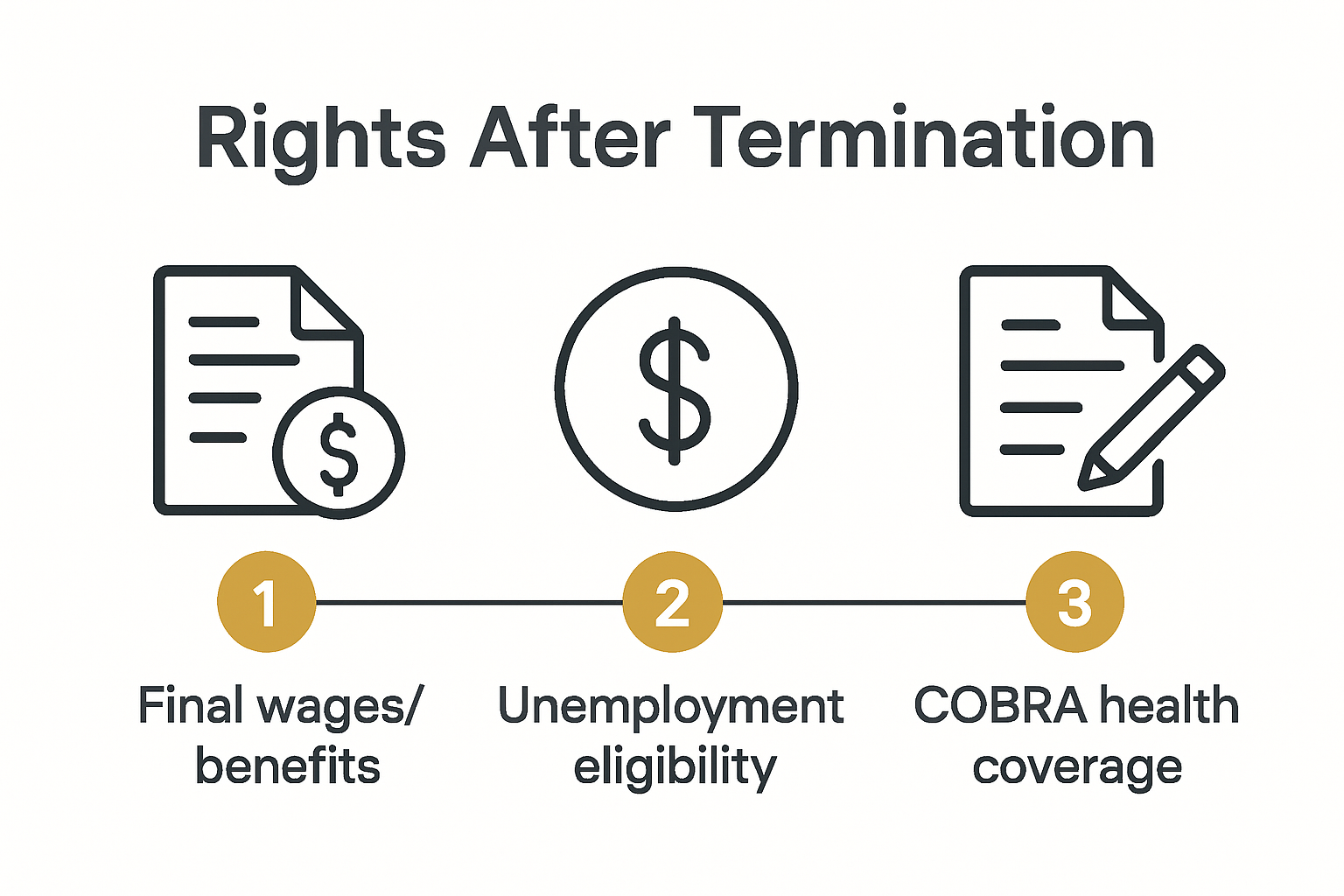
Federal and State Legal Safeguards
Legal protections extend far beyond simple wage considerations. Learn more about identifying unlawful termination to understand the comprehensive scope of employee rights.
To help clarify the different legal protections available to employees after termination, the following table summarizes key safeguards and their explanations.
| Legal Protection | Description |
|---|---|
| Anti-Discrimination | Protects against termination based on race, gender, age, disability, or other protected traits |
| Unemployment Benefits | Allows eligible employees to claim state benefits if terminated without cause |
| COBRA Health Coverage Continuation | Enables continued group health insurance for a limited period post-employment |
| Protection From Retaliation | Employees cannot be fired for whistleblowing or reporting legal violations |
| Final Wages & Accrued Benefits | Guarantees payment of owed salary and unused vacation upon termination |
| Right to File Complaints | Allows employees to report unfair practices to labor boards or pursue litigation |
Key legal protections include:
- Protection against discriminatory termination based on race, gender, age, disability, or other protected characteristics
- Right to file unemployment claims without employer interference
- Protection from retaliation for whistleblowing or reporting workplace violations
- Entitlement to continued health insurance coverage under COBRA
- Right to receive final wages and accrued benefits
According to the U.S. Department of Labor, employees are entitled to specific legal protections that prevent employers from engaging in arbitrary or malicious termination practices.
Navigating Wrongful Termination Scenarios
Wrongful termination occurs when an employer fires an employee for illegal reasons, which can include discrimination, retaliation, or violation of employment contracts. Employees in regions like Ontario, Pomona, Rancho Cucamonga, and throughout California have robust legal mechanisms to challenge such actions.
Important considerations for employees facing potential wrongful termination include:
- Documenting all communication and interactions with the employer
- Preserving performance evaluations and employment records
- Understanding the specific circumstances surrounding the termination
- Recognizing potential signs of discriminatory or retaliatory practices
- Consulting with an employment law professional to assess legal options
Employees should recognize that while employers have significant latitude in employment decisions, they cannot violate fundamental legal protections. When workplace actions cross legal boundaries, workers have the right to seek justice and potential compensation for unlawful treatment.
Recognizing Wrongful Termination and Its Implications
Wrongful termination represents a serious breach of employee rights, occurring when an employer fires a worker for illegal or discriminatory reasons. Understanding the nuanced landscape of termination laws is crucial for protecting professional interests and ensuring fair workplace treatment.
Defining Wrongful Termination
Wrongful termination extends beyond simple job loss, encompassing scenarios where an employee is fired for reasons that violate fundamental legal protections. Explore our comprehensive wrongful termination guide to understand the complex legal landscape.
Key indicators of wrongful termination include:
- Termination based on protected characteristics like race, gender, age, or disability
- Retaliation for reporting workplace harassment or safety violations
- Firing an employee for exercising legal rights such as filing a workers compensation claim
- Violation of written or implied employment contracts
- Termination that contradicts established company policies
According to the U.S. government, employees can file complaints with agencies like the EEOC or OSHA if they believe their termination was unlawful.
Legal and Professional Consequences
The implications of wrongful termination extend far beyond immediate job loss. Employees subjected to illegal termination may be entitled to significant legal remedies, including financial compensation, reinstatement, and potential punitive damages.
Potential consequences for employers engaging in wrongful termination include:
- Substantial financial penalties
- Legal requirement to reinstate the terminated employee
- Damage to company reputation and potential future recruitment challenges
- Potential federal and state regulatory investigations
- Personal liability for managers or executives responsible for the termination
Employees in regions like Ontario, Pomona, Rancho Cucamonga, and throughout California have robust legal mechanisms to challenge unjust terminations. By understanding their rights and documenting potential violations, workers can effectively protect themselves from discriminatory workplace practices.
Steps to Take When Facing Violations of Your Rights
Confronting workplace rights violations requires strategic action, careful documentation, and a clear understanding of legal protections. Employees must be proactive and methodical when addressing potential workplace injustices to protect their professional and legal interests.
Documenting and Preserving Evidence
Documentation is the foundation of any successful workplace rights claim. Learn more about understanding workplace retaliation to recognize the importance of thorough record-keeping.
Critical steps in documenting potential rights violations include:
To guide employees facing workplace rights violations, here is a summary table outlining recommended steps and their purposes.
| Step | Purpose |
|---|---|
| Document all relevant interactions | Build a record to support claims |
| Save emails, texts, and evidence | Preserve proof of potential violations |
| Record incident dates and specific details | Ensure accuracy for future complaints or legal actions |
| Collect witness contacts | Gather support from colleagues or observers |
| Preserve employment records and evaluations | Provide context for performance or employment history |
| File complaints with HR or agencies | Initiate formal review and resolution process |
| Consult with employment law professionals | Obtain expert guidance on rights and remedies |
- Keeping detailed written records of all interactions related to the violation
- Saving emails, text messages, and other communication evidence
- Documenting dates, times, and specific details of incidents
- Collecting contact information for potential witnesses
- Preserving performance evaluations and employment records
According to FindLaw, terminated employees have specific rights regarding documentation and potential legal recourse.
Pursuing Legal Remedies
Employees have multiple avenues for addressing workplace rights violations, ranging from internal grievance procedures to formal legal action. The process requires careful consideration and strategic planning.
Key steps in pursuing legal remedies include:
- Filing a complaint with appropriate internal HR departments
- Contacting state or federal employment agencies like the EEOC
- Consulting with an employment law attorney for professional guidance
- Preparing detailed documentation of the violation
- Understanding potential timeframes for filing claims
Employees in regions like Ontario, Pomona, Rancho Cucamonga, and throughout California should recognize that timely action is crucial. Workplace rights violations have strict reporting deadlines, and delaying action can potentially compromise your ability to seek justice and compensation.
Protect Your Rights After Job Termination
Losing your job unexpectedly can leave you feeling powerless and uncertain about what comes next. If you believe you have been treated unfairly or suspect your termination might be unlawful, it is critical to know you have strong legal rights and options. This article explains the signs of wrongful termination, the importance of timely documentation, and how understanding legal protections can make all the difference in your future.
Do not let confusion or fear prevent you from standing up for what is right. Our experienced team at Huprich Law fights vigorously for employees facing wrongful termination, discrimination, or retaliation throughout California. If you are unsure about your rights or the legality of your termination, visit our Wrongful Termination Resource for a practical guide on next steps. Now is the time to take control. Contact Huprich Law today at https://huprichlaw.com/ so you can safeguard your rights and pursue the justice you deserve.

Frequently Asked Questions
What rights do employees have after termination?
Employees have several rights after termination, including the right to receive final wages, protection against discriminatory termination, the eligibility for unemployment benefits if terminated without cause, and continuation of specific employment benefits under certain circumstances.
What should I do if I believe my termination was wrongful?
If you believe your termination was unlawful, you should document all communications with your employer, preserve performance evaluations, and consult with an employment law professional to explore your legal options for filing a complaint or seeking restitution.
How can I protect my rights after losing my job?
To protect your rights after losing your job, maintain detailed documentation of your employment interactions, be aware of your specific rights under federal and state laws, and act promptly to seek legal counsel if you suspect a violation of your employment rights.
Are there time limits for filing claims related to wrongful termination?
Yes, there are strict time limits for filing claims related to wrongful termination. These timeframes can vary by jurisdiction and the nature of the claim, so it’s essential to act quickly and consult legal guidance to avoid missing important deadlines.
Recommended
- Wrongful Termination Checklist 2025: You Need To Know This
- What Is Unlawful Termination? What You Need To Know.
- Top Signs of Wrongful Termination: You Need To Know This
- Severance Pay Eligibility in California: What You Need To Know
- Wrongful Termination A Complete Guide: Know Your Rights
https://huprichlaw.com/understanding-employee-rights-after-termination/?fsp_sid=2591


Comments
Post a Comment