Recovering Unpaid Wages in California: You Need To Know This

Tens of thousands of California workers miss out on earnings each year due to wage violations and unpaid wages. It seems impossible in a state with some of the strictest labor protections in the country and minimum wage among the highest nationwide. Yet many employers still try to skirt the rules or simply count on workers not fighting back. The surprise is California not only gives employees the right to every dollar earned, but the law even protects you from retaliation and makes the process to get your money back far more accessible than most people expect.
Table of Contents
- Understanding Your Rights To Unpaid Wages
- Steps To Take When Wages Are Withheld
- Legal Options For Discrimination Or Retaliation
- Understanding Discrimination And Retaliation
- Filing Administrative And Legal Claims
- Protecting Your Rights And Seeking Compensation
- Resources And Support For California Employees
- Government Support And Legal Resources
- Free And Low-Cost Legal Support
- Documenting And Preparing Your Case
Quick Summary
| Takeaway | Explanation |
|---|---|
| Understand California Wage Laws | Familiarize yourself with minimum wage, overtime, and payment requirements for wage protections. |
| Document Wage Violations Thoroughly | Keep accurate records of hours, pay rates, and communication with employers to support your claim. |
| File Claims Promptly | Act quickly by filing a wage claim or lawsuit to avoid missing deadlines and losing compensation. |
| Seek Legal Support if Needed | Utilize available legal resources or consult an attorney for guidance in complex cases of wage recovery. |
| Protect Yourself from Retaliation | Know your rights against employer retaliation for asserting claims and document any incidents immediately. |
Understanding Your Rights to Unpaid Wages
Recovering unpaid wages requires a clear understanding of California’s robust worker protection laws. Employees have significant legal protections that safeguard their right to fair compensation for work performed. Learn more about your wage rights in California.
California Wage Protection Laws
California provides some of the strongest wage protection laws in the United States. According to the California Courts official website, employees are entitled to full compensation for all hours worked, including overtime, minimum wage, and any agreed-upon wages. These protections cover various employment scenarios, from hourly workers to salaried employees across industries.
Key wage protection principles include:
- Minimum Wage Guarantees: California mandates higher minimum wage rates than federal standards, ensuring workers receive fair base compensation.
- Overtime Pay Rights: Employees must receive 1.5 times their regular rate for hours worked beyond 8 in a day or 40 in a week.
- Prompt Payment Requirements: Employers must pay wages at regular intervals and provide complete compensation for all work performed.
Types of Wage Violations
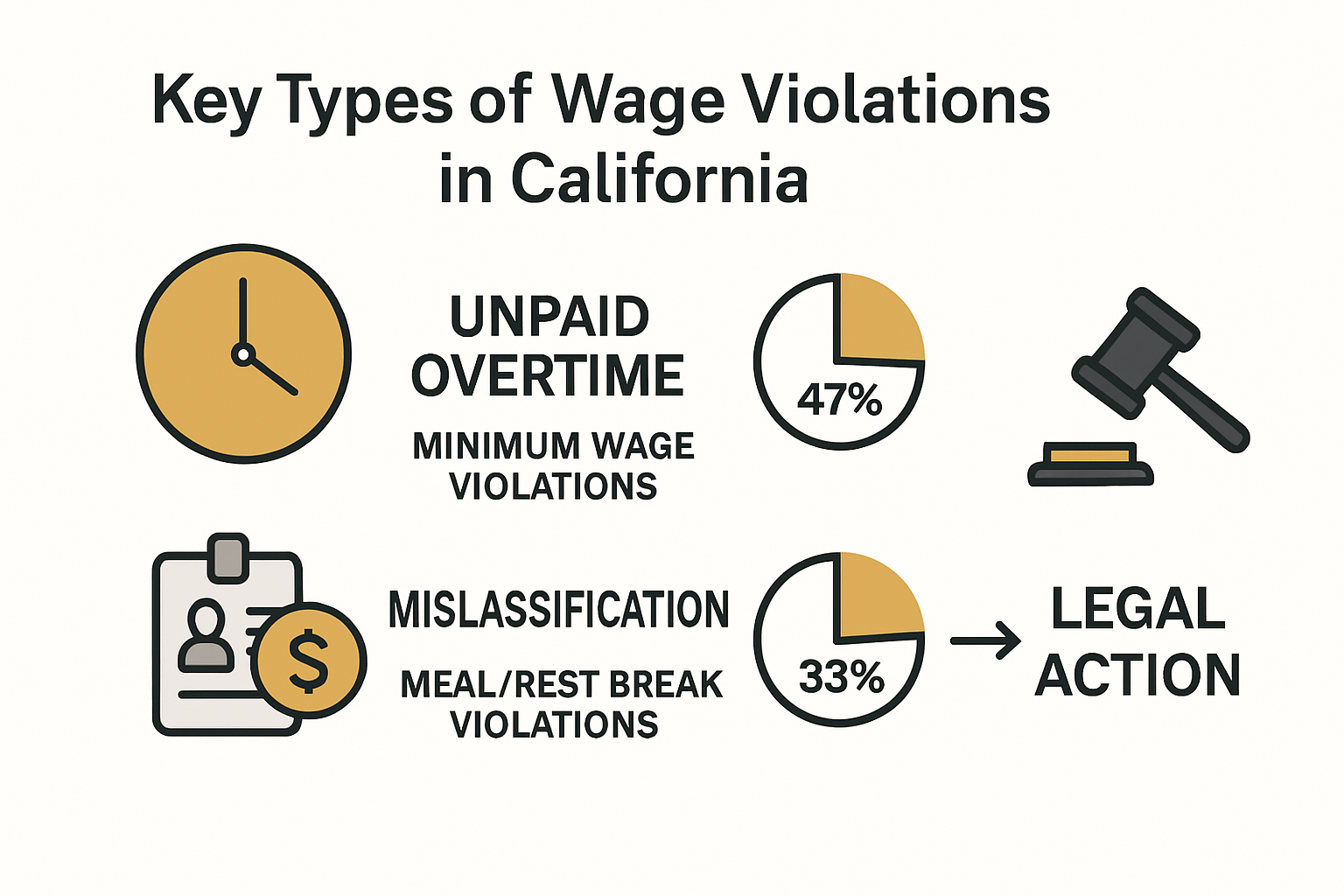
Wage violations can take multiple forms, each representing a potential legal claim for recovering unpaid wages. Employees might encounter several problematic scenarios:
- Unpaid Overtime: Employers who fail to compensate workers for extra hours worked.
- Minimum Wage Violations: Paying less than the legally mandated minimum wage.
- Misclassification: Incorrectly classifying employees as independent contractors to avoid wage responsibilities.
- Meal and Rest Break Violations: Failing to provide legally required breaks or compensation for missed breaks.
Understanding these violations is crucial for workers seeking to protect their rights. Each type of wage violation represents a potential legal avenue for recovering lost compensation. Workers should document all instances of potential wage theft, including work hours, communications with employers, and any evidence of underpayment.
Employees facing wage violations have multiple options for seeking justice. These include filing claims with the California Labor Commissioner’s Office, pursuing individual legal action, or participating in collective wage recovery efforts. The key is taking prompt and informed action to protect your hard-earned compensation.
Time is critical when addressing wage violations. California law provides specific statutes of limitations for wage claims, meaning delayed action could potentially limit your ability to recover unpaid wages. Workers should act quickly, gather documentation, and seek legal guidance to maximize their chances of successful wage recovery.
Steps to Take When Wages Are Withheld
When an employer withholds your wages, taking strategic and documented actions is crucial to recovering your hard-earned money. Learn about identifying wage theft practices to protect your rights effectively.
Documenting Your Wage Claim
Careful documentation forms the foundation of any successful unpaid wage recovery. According to the California Department of Industrial Relations, employees should meticulously collect and organize evidence of wage violations. This includes:
- Pay Stubs and Wage Records: Gather all available pay statements, time cards, and employment contracts.
- Work Schedules and Hours: Maintain a detailed log of hours worked, including dates, times, and specific job duties.
- Communication Evidence: Save all email correspondence, text messages, or written communications related to payment disputes.
- Employment Agreements: Collect copies of original job offer letters, employment contracts, and any wage-related documentation.
Filing an Official Wage Claim
California provides multiple avenues for recovering unpaid wages. The California Courts Self-Help Guide outlines several formal processes for wage recovery:
Recovering unpaid wages involves several steps, each with its own requirements and benefits. The following table summarizes the official avenues available in California for wage recovery and highlights their key aspects for easier comparison.
| Method | Best For | Key Requirements | Benefits |
|---|---|---|---|
| Labor Commissioner’s Office | Most wage claims | Submit administrative claim with documentation | No court fees, state investigation |
| Small Claims Court | Claims under $10,000 | File lawsuit, prepare relevant evidence | Faster, low cost, no attorney needed |
| Civil Lawsuit | Complex, high-value, or systemic cases | Formal complaint, legal representation likely | Potential for higher compensation |
Labor Commissioner’s Office Claim: File a wage claim directly with the California Labor Commissioner’s Office. This administrative process allows workers to seek recovery of unpaid wages without immediately entering the court system.
Small Claims Court: For wage claims under $10,000, employees can file a lawsuit in small claims court. This option provides a faster, less expensive route to wage recovery.
Civil Lawsuit: More complex wage violation cases might require filing a civil lawsuit. This approach is particularly effective for systematic wage theft or cases involving significant monetary damages.
Protecting Yourself from Retaliation
California law strongly protects employees who assert their wage rights. The Department of Industrial Relations emphasizes that employers cannot legally retaliate against workers for pursuing unpaid wage claims. Potential protections include:
- Preventing termination or demotion for filing a wage claim
- Protecting against reduction in work hours or pay
- Ensuring freedom from harassment or hostile work environments
If an employer retaliates, workers can file additional claims for damages beyond the original unpaid wages. Documenting any retaliatory actions becomes crucial in these scenarios.
Time is of the essence when recovering unpaid wages. California imposes strict statutes of limitations on wage claims, typically ranging from one to three years depending on the specific violation. Prompt action increases the likelihood of successful wage recovery and holds employers accountable for wage theft practices.
Workers should remember that seeking legal consultation can provide personalized guidance tailored to their specific wage violation circumstances. Professional legal support can help navigate complex wage recovery processes and maximize potential compensation.
Legal Options for Discrimination or Retaliation
Workplace discrimination and retaliation can significantly impact an employee’s professional and personal life. Learn about workplace discrimination rights in California to understand your legal protections and potential recourse.
Understanding Discrimination and Retaliation
Discrimination and retaliation are serious workplace violations that go beyond simple wage disputes. According to the U.S. Equal Employment Opportunity Commission, employers are strictly prohibited from taking adverse actions against employees who assert their legal rights or participate in protected activities.
California law protects employees from retaliation and discrimination for asserting their workplace rights. The following table summarizes activities protected by law and the types of protections provided to employees who participate in each activity.
| Protected Activity | Protection Provided |
|---|---|
| Filing a wage claim or workplace complaint | Protection against firing, demotion, pay cuts |
| Reporting harassment or discrimination | Safeguard from hostile work environment |
| Participating in workplace investigations | Bar against adverse actions (demotion, punishment) |
| Requesting reasonable accommodations | Right to necessary adjustments without retaliation |
| Discussing wage disparities with coworkers | Legal right to open wage discussions |
Types of protected activities include:
- Filing a wage claim or complaint about workplace conditions
- Reporting harassment or discriminatory practices
- Participating in workplace investigations
- Requesting reasonable accommodations
- Discussing wage disparities with coworkers
Filing Administrative for Unpaid Wages and Legal Claims
Employees facing discrimination or retaliation have multiple legal avenues to seek justice. The process typically involves several strategic steps:
Internal Reporting: Document and report incidents to your company’s human resources department or designated compliance officer.
Administrative Complaints: File formal complaints with state agencies like the California Department of Fair Employment and Housing (DFEH) or federal agencies such as the Equal Employment Opportunity Commission (EEOC).
Civil Lawsuits: If administrative remedies prove insufficient, employees can pursue civil litigation to seek damages, reinstatement, or other legal remedies.
Protecting Your Rights and Seeking Compensation
Retaliation for asserting workplace rights is illegal and can result in significant legal consequences for employers. Potential remedies for victims of discrimination or retaliation may include:
- Monetary damages for lost wages and emotional distress
- Reinstatement to a previous position
- Compensatory and punitive damages
- Mandatory workplace policy changes
- Attorney’s fees and legal costs
Employees should act quickly, as California law imposes strict time limitations on filing discrimination and retaliation claims. Most administrative complaints must be filed within one year of the incident, while civil lawsuits typically have shorter filing windows.
Documentation is critical in these cases. Employees should maintain detailed records of discriminatory actions, including dates, specific incidents, witnesses, and any communication related to the events. This evidence can substantially strengthen a potential legal claim.
Navigating discrimination and retaliation claims can be complex and emotionally challenging. Consulting with an experienced employment law attorney can provide personalized guidance, help evaluate the strength of your case, and develop a comprehensive legal strategy tailored to your specific circumstances.
Unpaid Wages Resources and Support for California Employees
Navigating workplace legal challenges can be overwhelming, but California provides numerous resources to support employees in their pursuit of justice. Learn about essential employment law basics to empower yourself with critical knowledge.
Unpaid Wages Government Support and Legal Resources
California offers comprehensive resources for employees seeking wage recovery and legal support. According to the California Department of Industrial Relations, workers have access to multiple official channels for addressing workplace violations:
- Labor Commissioner’s Office: Provides free assistance for wage claims and workplace dispute resolution
- California Department of Fair Employment and Housing: Handles discrimination and harassment complaints
- Legal Aid Organizations: Offer free or low-cost legal consultations for workers with limited financial resources
The Department of Industrial Relations’ Know Your Rights resources include multilingual brochures and educational materials that help workers understand their legal protections and rights in various workplace scenarios.
Unpaid Wages Free and Low-Cost Legal Support
Employees facing workplace challenges have several avenues for obtaining legal guidance without significant financial burden:
- Pro Bono Legal Clinics: Many local bar associations and law schools offer free legal consultations
- Workers’ Rights Hotlines: Provide immediate guidance and initial case assessments
- Community Legal Centers: Offer sliding-scale fees and support for low-income workers
- Online Legal Resources: Provide self-help guides and informational materials about workplace rights
Documenting Unpaid Wages and Preparing Your Case
Successful legal action requires meticulous preparation. The California DIR Resources for Workers emphasize the importance of comprehensive documentation:
- Maintain detailed records of work hours, communications, and potential violations
- Collect pay stubs, employment contracts, and email correspondence
- Create a chronological timeline of workplace incidents
- Gather contact information for potential witnesses
- Save copies of all relevant documentation
Workers should remember that time is critical when pursuing workplace legal claims. California imposes strict statutes of limitations, meaning delayed action can potentially compromise your ability to seek justice.
While these resources provide valuable support, each workplace situation is unique. Consulting with an experienced employment law attorney can offer personalized guidance tailored to your specific circumstances. Professional legal support can help you understand the nuances of your case, evaluate potential strategies, and maximize your chances of successful wage recovery or workplace rights protection.
Employees should approach these challenges with confidence, knowing that California’s robust worker protection laws and comprehensive support systems are designed to safeguard their rights and ensure fair treatment in the workplace.

Unpaid Wages Frequently Asked Questions
What are my rights regarding unpaid wages in California?
Employees in California have the right to full compensation for all hours worked, including overtime and minimum wage, under strict wage protection laws.
How do I document unpaid wages effectively?
To document wage violations, keep accurate records of pay stubs, work hours, communication with employers, and any employment agreements related to your pay.
What steps should I take if my employer withholds wages?
If your employer withholds wages, document the violations, file a claim with the California Labor Commissioner’s Office, or pursue legal action if necessary.
What protections do I have against retaliation from my employer?
California law protects employees from retaliation for asserting their wage rights. This includes protection against termination, demotion, or reductions in pay for filing wage claims.
Take Action Now if Your Wages Have Been Unfairly Withheld
Are you tired of feeling powerless when your employer refuses to pay you for every hour you worked? The challenge of recovering unpaid wages can leave you feeling overwhelmed and frustrated. As discussed in this guide, prompt documentation and legal knowledge are key, but the process can still seem daunting. If you have faced unpaid overtime, missing wages, or have been denied breaks, you deserve to have your rights protected and your voice heard.
At Huprich Law Firm, we have helped countless California employees reclaim what they are owed. Visit our Unpaid Wages and Overtime page to see how we can support your case or go straight to our main site to connect directly with our experienced California employment attorneys. Do not let another payday pass you by—take the first step toward justice today and let our team work to secure the compensation you have earned.
Recommended
- What Is Wage Theft in California? What You Need To Know
- Your Rights to Unpaid Wages California: What You Need To Know
- California Wage Theft Laws 2025 You Need To Know
- Wage Theft Prevention Act: Rights You Need To Know
https://huprichlaw.com/recovering-unpaid-wages-california-guide/?fsp_sid=2511


Comments
Post a Comment