Complete Guide to Gender and Pregnancy Discrimination Cases

Nearly one in five women report facing pregnancy discrimination at work according to national surveys. Discrimination based on gender or pregnancy is more than unfair treatment—it can damage careers, health, and finances. Understanding how federal and California laws protect employees from bias is the first step to standing up for yourself and building a safer, more equitable workplace.
Key Takeaways
| Point | Details |
|---|---|
| Protection Against Discrimination | Employees have legal protections under federal and state laws against gender and pregnancy discrimination. Employers must provide equal treatment and reasonable accommodations for pregnant workers. |
| Types of Discrimination | Workplace discrimination can manifest in various forms, including gender, pregnancy, racial, age, and disability discrimination, affecting opportunities and well-being. |
| Filing a Claim | To pursue a discrimination claim, document specific incidents and file a complaint with relevant authorities, ensuring timely action to safeguard rights. |
| Employer Responsibilities | Employers must actively prevent discrimination by implementing clear policies, providing training, and addressing complaints promptly to foster an inclusive environment. |
Table of Contents
- Defining Gender And Pregnancy Discrimination
- Types Of Discrimination In The Workplace
- Legal Protections For Employees In California
- Filing A Discrimination Claim In San Marino
- Employer Responsibilities And Potential Remedies
Defining Gender And Pregnancy Discrimination
Workplace discrimination based on gender and pregnancy is a serious violation of employee rights that can significantly impact a worker’s professional and personal life. Pregnancy discrimination and gender discrimination occur when an employer treats an employee unfairly due to their pregnancy status, gender identity, or sex characteristics. Explore more about workplace discrimination to understand your legal protections.
According to the Equal Employment Opportunity Commission (EEOC), federal laws provide comprehensive protections against such discriminatory practices. These protections cover multiple scenarios, including:
- Discrimination during hiring and recruitment
- Unequal treatment in job assignments and promotions
- Denial of reasonable workplace accommodations
- Harassment or hostile work environments
- Wrongful termination related to pregnancy or gender status
The legal framework protecting employees includes critical legislation like Title VII of the Civil Rights Act, the Pregnancy Discrimination Act (PDA), and the Pregnant Workers Fairness Act (PWFA). These laws mandate that employers cannot discriminate against employees based on pregnancy, childbirth, or related medical conditions. They require organizations to provide reasonable accommodations and treat pregnant workers the same as other employees with similar work capabilities.
Here’s a summary of federal laws protecting employees from gender and pregnancy discrimination:
| Law | Coverage | Key Protections |
|---|---|---|
| Title VII of the Civil Rights Act | Employers with 15+ employees | Prohibits discrimination based on sex, gender, pregnancy |
| Pregnancy Discrimination Act (PDA) | Part of Title VII | Requires equal treatment for pregnancy and related conditions |
| Pregnant Workers Fairness Act (PWFA) | Most employers | Mandates reasonable accommodations for pregnant workers |
Recognizing discrimination can be complex. It might manifest through subtle actions like being passed over for promotions, receiving reduced work hours, facing unnecessary performance scrutiny, or experiencing uncomfortable workplace interactions. If you believe you’ve experienced gender or pregnancy discrimination, documenting specific incidents and seeking legal guidance can help protect your rights and professional future.
Types Of Discrimination In The Workplace
Workplace discrimination encompasses multiple complex forms that can profoundly impact employees’ professional experiences and personal well-being. Workplace discrimination goes beyond simple unfair treatment, representing systematic barriers and prejudices that prevent individuals from achieving their full potential based on characteristics unrelated to job performance. Learn more about workplace discrimination nuances to understand the breadth of these challenges.
The primary types of workplace discrimination include:
- Gender Discrimination: Unfair treatment based on an individual’s sex, gender identity, or gender expression
- Pregnancy Discrimination: Negative actions against employees due to pregnancy, childbirth, or related medical conditions
- Racial Discrimination: Unequal treatment based on race, skin color, ethnic background, or cultural characteristics
- Age Discrimination: Prejudicial treatment of employees over 40 years old, limiting opportunities and career advancement
- Disability Discrimination: Failure to provide reasonable accommodations or unfair treatment of employees with physical or mental disabilities
- Sexual Orientation Discrimination: Negative actions based on an employee’s sexual orientation or perceived sexual orientation
- Religious Discrimination: Unfair treatment or lack of accommodation for employees’ religious beliefs and practices
Each type of discrimination can manifest through various subtle and overt behaviors, such as biased hiring practices, unequal pay, denied promotions, harassment, or creating hostile work environments. These discriminatory practices not only harm individual employees but also undermine workplace diversity, creativity, and overall organizational effectiveness.
Recognizing and addressing workplace discrimination requires a proactive approach. Employees should document incidents, understand their legal rights, and seek support from human resources or legal professionals who specialize in employment law. By identifying and challenging discriminatory practices, workers can help create more inclusive, equitable workplaces that value individual talents and contributions regardless of personal characteristics.
Legal Protections For Employees In California
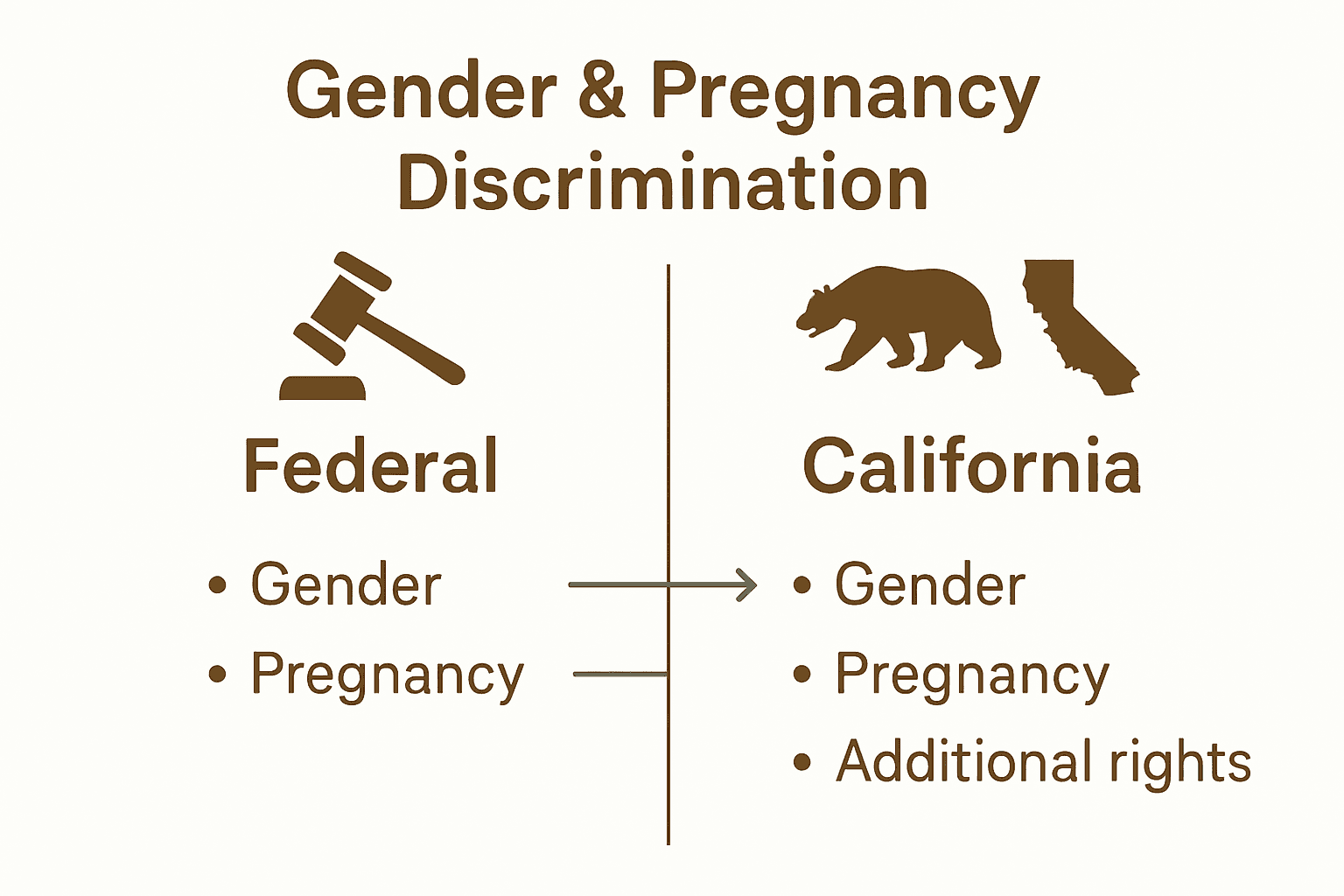
California offers robust legal protections for employees facing workplace discrimination, providing comprehensive safeguards that go beyond federal regulations. The Fair Employment and Housing Act (FEHA) stands as a cornerstone of these protections, explicitly prohibiting discrimination based on sex, pregnancy, childbirth, and related medical conditions. Learn more about your workplace rights to understand the full scope of legal protections available.
According to the California Department of Fair Employment and Housing, key legal protections for employees include:
- Protection from discriminatory hiring practices
- Right to reasonable workplace accommodations
- Protection from harassment and hostile work environments
- Guaranteed equal treatment in job assignments and promotions
- Legal recourse for wrongful termination related to protected characteristics
The legal framework in California combines both state and federal protections. As outlined by the Department of Labor, federal regulations reinforce these protections by ensuring that pregnancy-related conditions are treated identically to other similar medical conditions. This means employers cannot discriminate against employees due to pregnancy-related limitations or medical needs.
Employees experiencing discrimination have multiple avenues for seeking justice.
 This includes filing complaints with the California Civil Rights Department, pursuing internal grievance procedures, or seeking legal representation specializing in employment discrimination. Understanding these protections empowers workers to defend their rights, challenge unfair treatment, and maintain their professional dignity in the workplace.
Filing A Discrimination Claim In San Marino
Filing a discrimination claim in San Marino requires careful documentation, strategic planning, and understanding of both state and federal legal procedures. Workplace discrimination claims demand precise evidence and timely action to protect your professional rights. Our San Marino labor attorneys can guide you through this process and ensure your case receives comprehensive legal support.
The claim filing process typically involves several critical steps:
- Documenting specific discriminatory incidents with dates and details
- Gathering supporting evidence like emails, performance reviews, and witness statements
- Preserving communication records demonstrating unfair treatment
- Reporting incidents to your company’s human resources department
- Filing an official complaint with the California Civil Rights Department
According to the Department of Labor, individuals facing discrimination in federally funded programs have additional protection under Section 188 enforcement. This means if you are participating in job training, employment assistance, or workforce development programs, you have specific legal avenues for addressing pregnancy-related or gender discrimination.
Navigating a discrimination claim requires patience and persistence. Professional legal representation can significantly improve your chances of success by helping you understand complex legal requirements, preparing comprehensive documentation, and representing your interests effectively. Remember that time is critical in discrimination cases - most claims have strict filing deadlines, and waiting too long can compromise your ability to seek justice and compensation for workplace discrimination.
Employer Responsibilities And Potential Remedies
Employers have significant legal obligations to prevent and address workplace discrimination, with clear responsibilities outlined by federal and state regulations. Employer accountability goes beyond simply avoiding discriminatory actions and requires proactive measures to create inclusive work environments. Learn more about employee rights and employer responsibilities to understand the full scope of legal requirements.
According to the Equal Employment Opportunity Commission (EEOC), key employer responsibilities include:
- Treating pregnant employees equally to other employees with similar work capabilities
- Providing reasonable workplace accommodations
- Avoiding stereotyping based on gender or pregnancy status
- Implementing comprehensive anti-discrimination training
- Promptly investigating and addressing discrimination complaints
- Maintaining clear, non-discriminatory hiring and promotion practices
Potential remedies for discrimination victims can range from monetary compensation to workplace corrections. These may include back pay, reinstatement, front pay, compensatory damages for emotional distress, punitive damages in cases of severe misconduct, and mandatory organizational policy changes. Employers found in violation of discrimination laws may also face significant financial penalties, mandatory staff training, and potential civil litigation.
The legal landscape demands that employers not only avoid discriminatory practices but actively work to create equitable work environments. This means developing robust policies, training managers and employees about discrimination prevention, establishing clear reporting mechanisms, and demonstrating a genuine commitment to workplace diversity and inclusion. Failure to meet these responsibilities can result in serious legal and financial consequences, making proactive compliance not just a legal obligation but a critical business strategy.
Take Action Against Gender and Pregnancy Discrimination in California
If you are facing unfair treatment based on your pregnancy or gender at work, you know just how isolating and overwhelming this situation can feel. The article you just read highlights how discrimination can hold you back from promotions, lead to wrongful termination, or cause a hostile environment. Our California employment lawyers understand these challenges and are committed to protecting your rights under laws like the Pregnancy Discrimination Act and California’s Fair Employment and Housing Act. If you need support for related workplace accommodations, visit our Disability Accommodation page for more resources tailored to your needs.
You deserve a workplace that treats you fairly, values your contributions, and complies with the law. Do not wait if you notice discriminatory practices or have already lost income or respect at work because of your gender or pregnancy status. Get trusted legal guidance now from our California employment attorneys or reach out directly through our main website to schedule a confidential consultation. Stand up for your rights today and take the next step toward justice.
Frequently Asked Questions
What is gender discrimination in the workplace?
Gender discrimination refers to unfair treatment of employees based on their sex, gender identity, or gender expression. It can occur in hiring, job assignments, pay, promotions, and workplace environments.
What constitutes pregnancy discrimination?
Pregnancy discrimination involves negative actions taken against employees due to their pregnancy, childbirth, or related medical conditions. This can include unfair treatment in hiring, job assignments, or denying reasonable accommodations.
What legal protections do employees have against gender and pregnancy discrimination?
Employees are protected under federal laws such as Title VII of the Civil Rights Act, the Pregnancy Discrimination Act (PDA), and the Pregnant Workers Fairness Act (PWFA), which prohibit discrimination based on gender and pregnancy status.
How can I file a discrimination claim?
To file a discrimination claim, document specific incidents, gather supporting evidence, and report to your company’s human resources department. You can also file a complaint with relevant state or federal agencies, such as the California Civil Rights Department.
Recommended
- Discrimination at Work California: What You Need To Know
- Age Discrimination Examples: You Need To Know This
- Important Info About Discrimination in California Labor Law
- Big Facts About Sexual Orientation Discrimination at Work
https://huprichlaw.com/gender-pregnancy-discrimination-san-marino/?fsp_sid=2554


Comments
Post a Comment