Can You Sue for Workplace Bullying? You Need To Know This

Workplace bullying is more common than most people realize and it can turn an ordinary office into a source of daily anxiety. About 30% of workers experience direct bullying at some point in their careers which is a number that might surprise you. Many people think it is just tough management or normal work stress but the line gets crossed far more often than anyone expects.
Table of Contents
- Defining Workplace Bullying: What Is It?
- The Importance of Addressing Workplace Bullying
- Legal Framework: Laws Protecting Against Workplace Bullying
- Establishing Grounds for a Lawsuit: Key Concepts
- The Role of Documentation and Evidence in Legal Actions
Quick Summary
| Takeaway | Explanation |
|---|---|
| Workplace bullying is repetitive abuse | It involves consistent, intentional actions meant to dominate or degrade an employee. |
| Types include verbal and digital harassment | Bullying can manifest as harmful words, gossip, or online attacks. |
| Addressing bullying is critical for health | Ignoring bullying can lead to mental health issues and drop in job satisfaction. |
| Legal actions require evidence of harm | To file a lawsuit, document incidents detailing patterns of bullying behavior. |
| California laws offer broader protections | Employees in California may pursue claims even without specific discriminatory elements. |
Defining Workplace Bullying: What Is It?
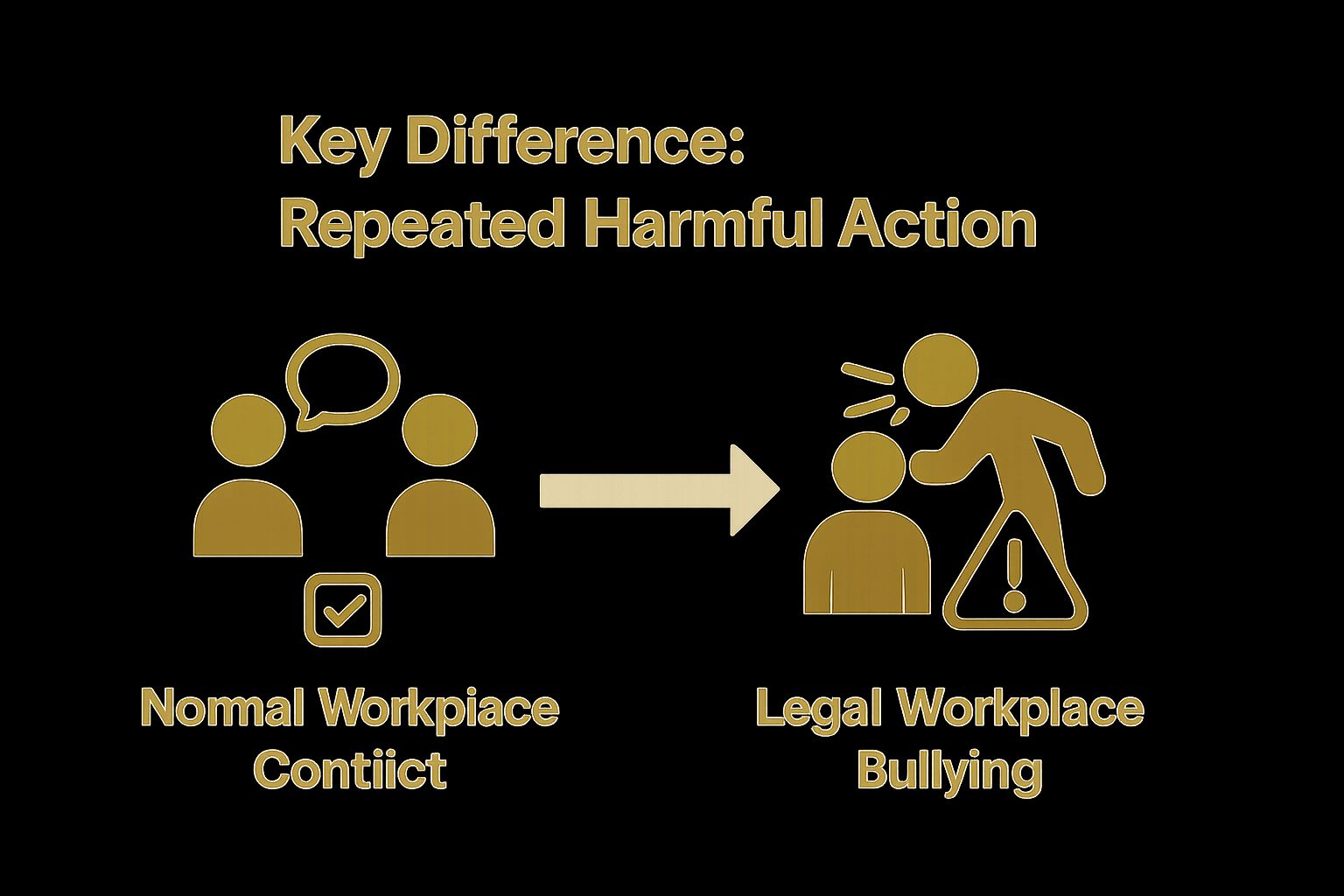
Workplace bullying represents a persistent pattern of harmful behavior that creates a hostile, intimidating work environment. Unlike occasional workplace conflicts, bullying involves repeated, intentional actions designed to demean, intimidate, or undermine an employee’s professional standing and personal dignity. Learn more about workplace bullying laws in California to understand your legal protections.
The Core Elements of Workplace Bullying
Workplace bullying can manifest in multiple forms, each targeting an employee’s sense of safety and professional respect. The core characteristics typically include:
- Repetitive and intentional behavior
- Actions designed to humiliate or marginalize
- Persistent pattern of negative interactions
These behaviors are not random or isolated incidents but calculated attempts to create psychological harm. According to research from the Workplace Bullying Institute, approximately 30% of workers experience direct bullying during their careers, with significant psychological and professional consequences.
Types of Workplace Bullying Behaviors
Workplace bullying encompasses various harmful behaviors that can occur through multiple channels:
- Verbal abuse: Constant criticism, yelling, spreading malicious rumors
- Professional sabotage: Undermining work performance, blocking promotions
- Psychological manipulation: Isolating employees, setting impossible standards
- Digital harassment: Inappropriate emails, messages, or online communications
Employees experiencing these behaviors often feel trapped, uncertain whether their experiences constitute genuine bullying or simply challenging workplace dynamics.
The following table summarizes the main types of workplace bullying behaviors discussed in the article, providing examples and their potential effects on victims.
| Type of Bullying | Example Behaviors | Potential Effects on Victims |
|---|---|---|
| Verbal abuse | Constant criticism, yelling, spreading malicious rumors | Increased stress, lowered self-esteem |
| Professional sabotage | Undermining work performance, blocking promotions | Reduced confidence, stalled career |
| Psychological manipulation | Isolating employees, setting impossible standards | Anxiety, feelings of helplessness |
| Digital harassment | Inappropriate emails, messages, or online communications | Disturbed well-being, emotional distress |
| Understanding the nuanced definition of workplace bullying becomes crucial in determining whether legal recourse is appropriate and necessary. |
The Importance of Addressing Workplace Bullying
Workplace bullying extends far beyond simple interpersonal conflict, representing a serious organizational and individual health challenge. Learn more about addressing workplace harassment to understand comprehensive strategies for intervention.
Psychological and Professional Consequences
The impact of workplace bullying reaches deep into an employee’s psychological well being and professional trajectory. Victims frequently experience significant mental health challenges, including:
- Elevated stress levels
- Decreased job satisfaction
- Potential development of anxiety and depression
- Reduced professional confidence
According to research from the American Psychological Association, persistent workplace bullying can lead to profound psychological trauma that extends beyond the immediate work environment.
Organizational and Economic Implications
Workplace bullying does not just harm individual employees but creates substantial organizational risks. Companies that tolerate bullying behaviors face serious consequences including:
- Increased employee turnover
- Reduced overall workplace productivity
- Potential legal liability
- Damaged organizational reputation
The economic costs of workplace bullying are substantial, with estimates suggesting that companies can lose significant resources through reduced performance, increased healthcare costs, and potential legal challenges. These multifaceted impacts underscore why proactive prevention and robust response mechanisms are critical in modern workplace management.
Legal Framework: Laws Protecting Against Workplace Bullying
While workplace bullying lacks a comprehensive federal statute, several legal mechanisms provide protection for employees experiencing hostile work environments. Explore workplace discrimination laws in California to understand your comprehensive legal protections.
Federal Anti Harassment Protections
Federal laws offer critical safeguards against workplace bullying when the harassment intersects with specific protected characteristics. According to research from the Equal Employment Opportunity Commission, workplace harassment becomes legally actionable when it involves discrimination based on:
- Race
- Color
- Religion
- Sex
- National origin
- Age (40 and older)
- Disability
- Genetic information
California State Level Protections
California provides more robust employee protections compared to federal standards. The state recognizes workplace bullying through multiple legal frameworks that extend beyond federal guidelines. California law allows employees to pursue claims when workplace behavior:
- Creates a hostile work environment
- Interferes with job performance
- Causes significant emotional distress
- Violates reasonable workplace standards
Unlike many states, California empowers employees to seek legal recourse for workplace harassment that does not necessarily involve discriminatory elements.
This table outlines the differences between Federal and California legal protections against workplace bullying, making it easy to compare employee rights across jurisdictions.
| Legal Aspect | Federal Protections | California State Protections |
|---|---|---|
| Discriminatory Elements Needed | Yes | No |
| Covered Characteristics | Race, color, religion, sex, etc. | Includes non-protected-class harassment |
| Hostile Work Environment Claim | Must relate to protected class | Broader definition allowed |
| Emotional Distress Recognized | Limited | Explicitly considered |
| Ability to Sue for Bullying | Limited to certain cases | Broader grounds to file claims |
| The state’s progressive stance recognizes that psychological harm can occur independent of specific protected class status, offering broader protection for workers experiencing systemic workplace abuse. |
Establishing Grounds for a Lawsuit: Key Concepts
Legal action for workplace bullying requires meeting specific legal standards that demonstrate the behavior goes beyond mere workplace conflict. Learn more about whistleblower protections to understand the nuanced legal landscape of workplace harassment.
Proving Severity and Persistent Pattern
To establish viable legal grounds, employees must demonstrate that the bullying behavior meets critical legal thresholds. According to guidance from the Equal Employment Opportunity Commission, successful workplace bullying claims typically require proving:
- Repeated and deliberate harmful actions
- Demonstrable psychological or professional harm
- Evidence of systematic targeting
- Documentation of reported incidents
Legal Standards of Workplace Harassment
Not all unpleasant workplace interactions constitute legal harassment. California courts and employment law require substantial evidence that the behavior:
- Creates a genuinely hostile work environment
- Substantially interferes with work performance
- Involves discriminatory elements or protected characteristics
- Represents more than isolated or trivial incidents
The legal burden of proof requires employees to provide concrete evidence demonstrating that the workplace bullying was severe, persistent, and materially impacted their professional and psychological well being. This standard ensures that legitimate workplace harassment claims are distinguished from mere interpersonal workplace tensions, protecting both employees and employers from frivolous litigation.
The Role of Documentation and Evidence in Legal Actions
Documentation serves as the critical foundation for any workplace bullying legal claim, transforming personal experiences into compelling legal evidence. Explore our comprehensive guide on employee rights to understand how proper documentation can strengthen your case.
Comprehensive Evidence Collection
Building a robust legal case requires meticulous and strategic documentation. According to guidance from the Equal Employment Opportunity Commission, effective documentation should include:
- Detailed written accounts of each bullying incident
- Specific dates, times, and locations of occurrences
- Names and contact information of potential witnesses
- Copies of relevant emails, messages, or communications
- Records of any internal complaints or reports filed
Types of Compelling Evidence
Successful workplace bullying claims rely on multiple forms of evidence that collectively demonstrate a pattern of harmful behavior. Employees should focus on collecting:
- Physical documentation (emails, texts, memos)
- Witness statements and testimonies
- Performance reviews showing impact on professional standing
- Medical records documenting psychological impact
- Electronic communication records
The strength of a workplace bullying lawsuit lies not just in isolated incidents, but in presenting a comprehensive narrative that demonstrates a consistent pattern of intentional, harmful behavior. Detailed, objective documentation transforms personal experiences into legally actionable evidence, providing a clear picture of the systemic harassment experienced by the employee.

Take Control When Workplace Bullying Crosses the Line
Experiencing repeated hostility and intimidation at work can feel overwhelming. If your professional reputation, mental health, or daily performance is being threatened by persistent mistreatment, understanding your legal options is the first step to restoring your dignity. Our team at Huprich Law Firm understands how bullying can have a serious impact on your life. We offer in-depth knowledge on cases involving discrimination, hostile work environments, and retaliation. Explore our dedicated Discrimination and Retaliation resources to learn how your experience may fit under California law.
You should not have to stand alone against workplace bullying. Let us help you turn your detailed documentation and experience into a powerful legal case. Protect your rights and reclaim your workplace security—contact us today through Huprich Law Firm for a confidential consultation. Your peace of mind starts with a single call.
Frequently Asked Questions
Can I sue for workplace bullying if it doesn’t involve discrimination?
You can sue for workplace bullying even if your experience does not directly involve discrimination. Many states allow claims based on emotional distress and hostile work environments. Document your experiences thoroughly to establish a case.
What evidence do I need to gather to support my lawsuit for workplace bullying?
To support a lawsuit for workplace bullying, collect all relevant evidence, including written accounts of incidents, dates, and any witness testimonies. Keep detailed records of communications, complaints, and any performance reviews to illustrate the impact on your work.
How can I prove that the bullying is severe and persistent?
To prove bullying is severe and persistent, you need to demonstrate a pattern of negative, intentional behavior over time. Maintain a detailed log of incidents, documenting each occurrence, including dates and descriptions, to highlight the unreasonable nature of the behavior.
What should I do if my employer does not take action against workplace bullying?
If your employer does not take action, document your complaints and their lack of response. You may then choose to explore legal avenues by consulting with an attorney who specializes in workplace harassment to discuss potential next steps.
How long do I have to file a lawsuit for workplace bullying?
The time limit to file a lawsuit for workplace bullying varies, but it’s usually capped at a few years from when the incidents occurred. Check local laws or speak with an attorney to ensure you take action within the appropriate timeframe, typically ranging from one to three years.
Is psychological harm a necessary component for a workplace bullying lawsuit?
Yes, psychological harm is an important component of a bullying lawsuit. You should document any mental health issues resulting from the bullying, such as stress or anxiety, to establish the adverse effects of the bullying behavior on your well-being.
Recommended
- Workplace Bullying Laws California: What You Need To Know
- Everything You Need To Know To Address Workplace Bullying
- Whistleblower Retaliation California: What You Need To Know
- Discrimination at Work California: What You Need To Know
https://huprichlaw.com/understanding-can-you-sue-for-workplace-bullying/?fsp_sid=2552


Comments
Post a Comment