Race Discrimination at Work: You Need To Know This

Race discrimination at work is still an everyday reality for many people in California, even with all the rules meant to stop it. Nearly one in four workers in the United States says they have experienced discrimination at their job. That sounds high, but most of these incidents never show up in obvious ways like slurs or outright hostility. You might be surprised that the biggest warning signs are often things like being passed over for a promotion or getting harsher penalties than coworkers of a different background. Understanding these hidden signals can make all the difference when it comes to standing up for your rights—and knowing what the law actually protects might be the best tool you have.
Table of Contents
- Recognizing Race Discrimination At Work
- Understanding The Subtle Signs Of Workplace Race Discrimination
- Legal Protections Against Race Discrimination
- Legal Protections For California Employees
- California Fair Employment And Housing Act (feha)
- Federal And State Anti Discrimination Laws
- Legal Remedies And Employee Rights
- Reporting Race Discrimination And Retaliation
- Seeking Help With Lost Wages Or Damages
Quick Summary
| Takeaway | Explanation |
|---|---|
| Recognize subtle signs of race discrimination. | Look out for unequal promotions and harsher penalties based on race in your workplace. |
| California’s FEHA offers strong legal protections. | The Fair Employment and Housing Act protects employees from discrimination in various employment aspects, including hiring and workplace environment. |
| Document incidents of discrimination thoroughly. | Keep detailed records of discriminatory actions, including dates and witnesses, to support your claims effectively. |
| Report discrimination through internal and external channels. | Use company procedures first; escalate to state or federal agencies if necessary for proper resolution. |
| Seek legal advice for claims about lost wages. | Consult with an attorney to understand your rights and navigate the complexities of filing for economic damages. |
Recognizing Race Discrimination at Work
Race discrimination in the workplace remains a persistent challenge for many employees across California. Race discrimination occurs when an employer treats an employee unfairly based on their race, color, national origin, or racial characteristics. While many workplaces claim to be inclusive, subtle and overt forms of racial discrimination continue to impact workers’ professional experiences and opportunities.
Understanding the Subtle Signs of Workplace Race Discrimination
Recognizing race discrimination isn’t always straightforward. According to the U.S. Equal Employment Opportunity Commission, race discrimination can manifest in numerous nuanced ways beyond obvious harassment. These discriminatory practices might include unfair performance evaluations, consistently being passed over for promotions, receiving less desirable work assignments, or experiencing differential treatment compared to colleagues of other races.
Employees might notice patterns such as:
- Unequal Career Advancement: White employees receiving promotions at significantly higher rates
- Differential Treatment: Harsher disciplinary actions for similar workplace behaviors
- Exclusionary Workplace Culture: Being consistently left out of important meetings or social interactions
To help you quickly recognize the common subtle and overt forms of workplace race discrimination, here’s a summary table:
| Type of Discrimination | Example Behaviors |
|---|---|
| Unequal Career Advancement | Passed over for promotions, despite similar or better qualifications |
| Differential Treatment | Harsher penalties compared to others for similar actions |
| Exclusionary Workplace Culture | Left out of meetings or important social/work events |
| Unfair Performance Evaluation | Lower reviews without clear justification |
| Unfavorable Work Assignments | Given less desirable or more difficult tasks |
| Hostile Work Environment | Exposure to jokes, slurs, or offensive material |
Legal Protections Against Race Discrimination
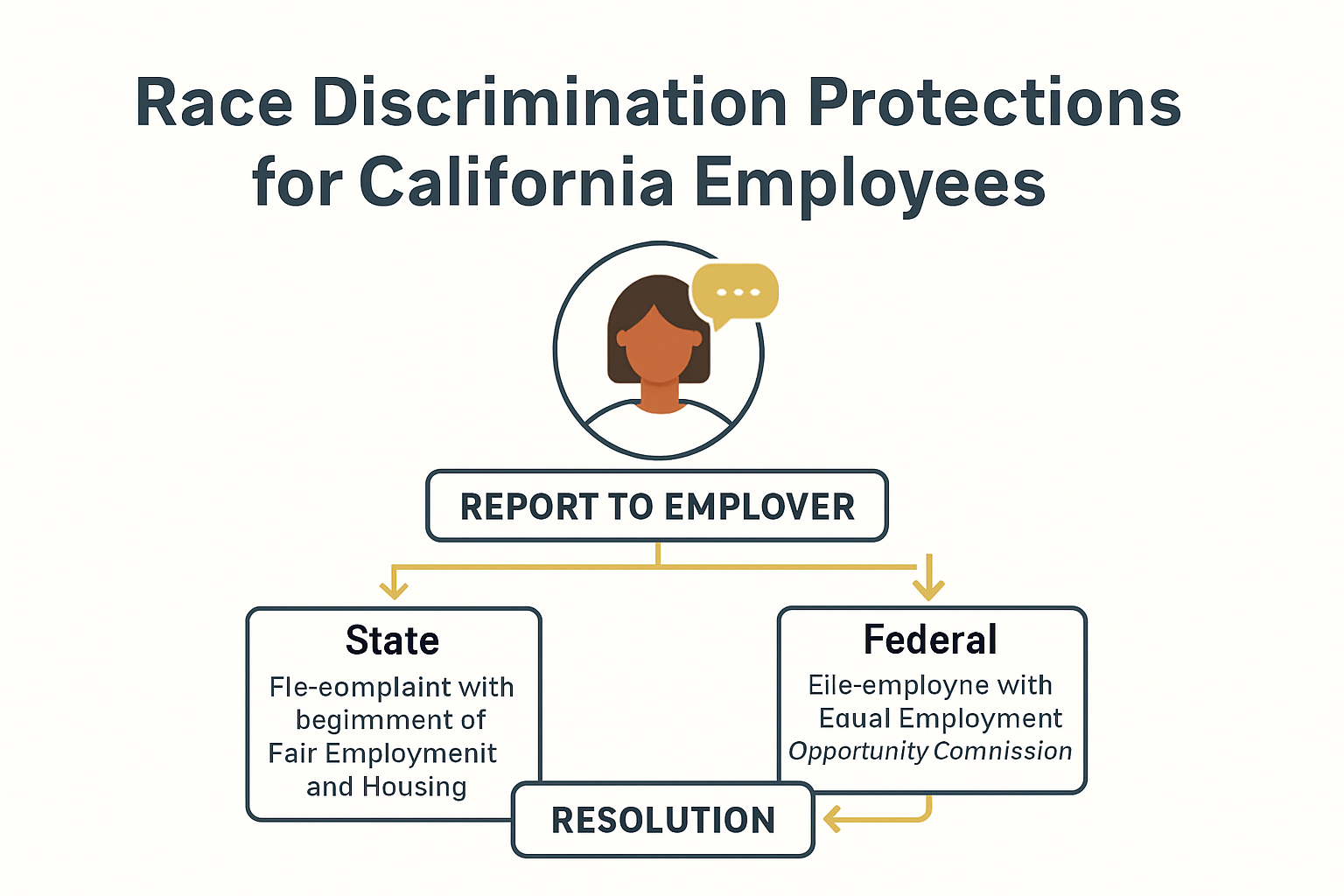
California provides robust legal protections for employees facing race discrimination. California’s Department of Fair Employment and Housing enforces strict regulations prohibiting workplace discrimination based on race. These protections cover various employment aspects including hiring, firing, promotions, compensation, and workplace environment.
Employees experiencing race discrimination have multiple legal avenues. These may include filing internal complaints, submitting claims with state or federal agencies, or pursuing legal action to seek remedies such as back pay, reinstatement, or compensation for emotional distress. Read our comprehensive guide on workplace discrimination rights to understand your full range of legal protections.
Importantly, race discrimination isn’t limited to treatment by supervisors. It can also involve hostile work environments created by coworkers, where racist comments, jokes, or imagery create an uncomfortable and unprofessional atmosphere. Employers have a legal obligation to address and prevent such behaviors, regardless of the source.
Documenting specific incidents, including dates, witnesses, and detailed descriptions, becomes crucial when addressing potential race discrimination. Employees should preserve emails, performance reviews, and other relevant communications that might demonstrate a pattern of discriminatory behavior.
If you believe you are experiencing race discrimination, remember that you are not alone. California law provides strong protections, and numerous resources are available to support workers in challenging unfair treatment. Speaking with an experienced employment attorney can help you understand your rights and determine the most appropriate course of action for your specific situation.
Legal Protections for California Employees
California offers some of the most comprehensive legal protections for employees in the United States, providing robust safeguards against workplace discrimination and ensuring workers can pursue justice when their rights are violated. The state’s extensive legal framework goes beyond federal regulations, creating a strong shield for employees facing racial discrimination or other forms of workplace misconduct.
California Fair Employment and Housing Act (FEHA)
The cornerstone of employee protection in California is the Fair Employment and Housing Act (FEHA). According to the California Department of Fair Employment and Housing, this landmark legislation provides extensive protections against discrimination in all aspects of employment. FEHA applies to employers with five or more employees and prohibits discrimination based on race, color, national origin, and other protected characteristics.
Key protections under FEHA include:
- Hiring and Firing: Employers cannot make employment decisions based on race
- Compensation and Benefits: Equal pay and benefits must be provided regardless of racial background
- Workplace Environment: Protection from racial harassment and hostile work conditions
Federal and State Anti Discrimination Laws
Employees benefit from a multilayered system of legal protections. The U.S. Equal Employment Opportunity Commission enforces federal laws that complement California’s state regulations. Title VII of the Civil Rights Act provides additional protection against workplace discrimination, making it illegal for employers to discriminate based on race, color, religion, sex, or national origin.
California takes these protections even further. Learn more about comprehensive employment law protections to understand the full scope of your rights as an employee in the state.
Race Discrimination Legal Remedies and Employee Rights
Employees experiencing race discrimination have multiple avenues for seeking justice. These include filing complaints with the California Civil Rights Department, pursuing administrative claims, or initiating legal action through the court system. Potential remedies may include:
- Monetary compensation for lost wages
- Reinstatement to a previous position
- Compensation for emotional distress
- Punitive damages in cases of severe discrimination
- Mandatory workplace training and policy changes
It is crucial to document all instances of potential discrimination carefully. This includes saving emails, recording specific incidents, noting dates and witnesses, and preserving any physical or digital evidence that might support a discrimination claim.
The legal landscape for employee protection continues to evolve, with California consistently at the forefront of progressive workplace rights. While the process of addressing workplace discrimination can seem daunting, employees have powerful legal tools to protect themselves and seek justice. Consulting with an experienced employment attorney can provide personalized guidance and help navigate the complex legal system to effectively address workplace discrimination.
To help clarify the differences between state and federal anti-discrimination protections, below is a comparison table summarizing key features:
| Law/Agency | Coverage | Key Protections | Who it Applies To |
|---|---|---|---|
| CA Fair Employment & Housing Act (FEHA) | Race, color, national origin + other protected classes | Hiring, firing, compensation, harassment, workplace environment | Employers with 5+ employees |
| Title VII (Civil Rights Act, EEOC) | Race, color, religion, sex, national origin | Hiring, firing, harassment, compensation | Employers with 15+ employees |
Reporting Race Discrimination and Retaliation
Reporting workplace race discrimination requires careful strategy and understanding of legal protections. Employees must navigate a complex process that involves documenting incidents, understanding their rights, and taking strategic steps to address discriminatory behavior while protecting themselves from potential retaliation.
Internal Reporting Procedures
The first step in addressing race discrimination typically involves internal reporting mechanisms. According to the U.S. Equal Employment Opportunity Commission, employees should follow their company’s established complaint procedures. This usually means:
- Documenting specific discriminatory incidents in writing
- Reporting concerns to human resources or a designated supervisor
- Maintaining detailed records of all communications
- Preserving any evidence supporting the discrimination claim
Employees should be aware that most employers are required to have formal procedures for handling discrimination complaints. Explore our comprehensive guide on workplace discrimination rights to understand the full scope of your internal reporting options.
Legal Reporting Channels
If internal reporting fails to resolve the issue, employees have several external reporting channels. The California Civil Rights Department provides official mechanisms for filing discrimination complaints. These formal channels include:
- Filing a complaint with the California Civil Rights Department
- Submitting a charge with the federal Equal Employment Opportunity Commission
- Initiating a civil lawsuit in state or federal court
Crucial considerations during this process include strict time limitations for filing complaints. In California, employees typically have three years from the date of the discriminatory incident to file a state-level complaint, while federal complaints have shorter filing windows.
Protection Against Retaliation
One of the most critical protections for employees is the legal shield against retaliation. California law explicitly prohibits employers from taking adverse actions against employees who report discrimination. Retaliation can include:
- Termination
- Demotion
- Reduced work hours
- Hostile work environment
- Negative performance evaluations
If an employer retaliates after a discrimination complaint, employees can pursue additional legal action. This means employers cannot punish workers for speaking up about discriminatory practices, even if the initial discrimination claim is not ultimately proven.
Navigating race discrimination reporting requires careful documentation, strategic communication, and a clear understanding of legal protections. While the process can feel overwhelming, employees have robust legal tools to defend their rights. Consulting with an experienced employment attorney can provide personalized guidance and help determine the most effective approach for addressing workplace discrimination.
Seeking Help With Lost Wages or Damages
Race discrimination in the workplace can result in significant financial and emotional damages for employees. Understanding how to seek compensation for lost wages and other harm becomes crucial in addressing workplace injustices and protecting your professional rights.
Types of Recoverable Damages
Employees experiencing race discrimination may be eligible for various forms of compensation. According to the U.S. Equal Employment Opportunity Commission, potential damages can include:
- Back Pay: Compensation for wages lost due to discriminatory termination or demotion
- Front Pay: Projected future earnings if reinstatement is not feasible
- Emotional Distress Damages: Compensation for psychological harm caused by discrimination
- Punitive Damages: Additional monetary penalties for egregious discriminatory behavior
- Legal Fees and Court Costs: Potential recovery of attorney expenses
Learn more about wage recovery strategies to understand the full scope of potential financial remedies available to discriminated employees.
Below is a summary table outlining the main types of recoverable damages and examples of what they may include:
| Type of Damage | Description | Example |
|---|---|---|
| Back Pay | Wages lost due to discrimination | Missed pay after unjust termination |
| Front Pay | Future earnings if reinstatement is not possible | Lost future income after wrongful discharge |
| Emotional Distress Damages | Compensation for mental suffering | Trauma, anxiety, or humiliation caused by discrimination |
| Punitive Damages | Monetary penalty for severe misconduct | Awarded in cases of deliberate or egregious discrimination |
| Legal Fees & Court Costs | Recovery of attorney expenses and court costs | Payment for lawyer and case filing fees |
Legal Calculation of Lost Wages
Calculating lost wages requires comprehensive documentation and expert analysis. The California Department of Industrial Relations recommends employees preserve detailed records including:
- Employment contracts
- Pay stubs
- Performance evaluations
- Correspondence related to job status
- Documentation of missed promotion opportunities
Employment attorneys typically work with financial experts to calculate precise economic damages, considering factors like base salary, potential bonuses, career trajectory, and lost benefits.
Filing a Comprehensive Damages Claim
Successful damages claims require strategic legal preparation. Key steps include:
- Gathering comprehensive evidence of discrimination
- Documenting specific financial impacts
- Obtaining expert testimony
- Demonstrating a clear link between discrimination and economic harm
- Presenting a compelling narrative of workplace injustice
Time limitations are critical in damages claims. California law provides specific windows for filing discrimination claims, typically three years from the discriminatory incident. Prompt action and meticulous documentation significantly strengthen potential legal recovery.
Navigating lost wages and damages claims can be complex. While the process might seem overwhelming, employees have powerful legal tools to seek justice. Professional legal guidance can help translate your experience into a compelling claim, ensuring you receive fair compensation for workplace discrimination.

Frequently Asked Questions
What constitutes race discrimination in the workplace?
Race discrimination occurs when an employer treats an employee unfairly based on their race, color, national origin, or racial characteristics. This includes subtle behaviors such as unequal promotions or harsher penalties compared to coworkers of different racial backgrounds.
What legal protections are in place for California employees facing race discrimination?
California employees are protected under the Fair Employment and Housing Act (FEHA) and federal laws, which prohibit discriminatory practices in hiring, firing, promotions, and workplace conditions based on race and other protected characteristics.
How can I report race discrimination at my workplace?
Employees should first utilize internal reporting procedures by documenting incidents and reporting them to HR or a supervisor. If internal resolution is unsuccessful, they can file a complaint with the California Civil Rights Department or the Equal Employment Opportunity Commission (EEOC).
What types of damages can I seek if I experience race discrimination?
Employees may be entitled to recover various damages, including back pay, front pay, emotional distress damages, punitive damages for severe misconduct, and reimbursement for legal fees and court costs.
Stand Up to Race Discrimination With Trusted Legal Support
Experiencing subtle race discrimination in the workplace is not just unfair—it’s illegal. If you have faced unequal promotions, harsher penalties, or have felt excluded because of your race, you know how isolating and overwhelming this can feel. California law offers you strong protection, but taking the first step is not always easy. Our firm understands these challenges. We are dedicated to helping employees like you fight back against injustice, ensuring your story is heard and your rights are defended.
Explore your options by visiting our Discrimination page, where you can learn about legal remedies tailored to your situation. Do not let another opportunity for fairness pass you by. Find out how our experienced team can help you reclaim lost wages and restore dignity at work—connect with us at Huprich Law Firm now and take the first step toward justice.
Recommended
- Discrimination at Work California: What You Need To Know
- Employee Privacy Rights California: You Need To Know This
- Employment Law Basics 2025: What You Need To Know
- Employment Law for Racial Discrimination in California
https://huprichlaw.com/race-discrimination-at-work-california-employee-rights/?fsp_sid=1876


Comments
Post a Comment