California Overtime Pay Rules 2025: What You Need To Know

California workers put in some of the longest hours in the country and overtime pay rules are meant to guarantee fair pay for those extra shifts. Now brace yourself. Under current laws, employees can earn double their regular pay after just 12 hours in a single day and even small businesses face new requirements for agricultural overtime in 2025. Most people focus on the hourly rate and miss what really matters—the real challenge is knowing if your job type makes you exempt and how even small errors in tracking hours can mean thousands of dollars lost or won.
Table of Contents
- Understanding Overtime Pay Rules In California
- Common Overtime Violations And Employee Rights
- Workplace Discrimination, Retaliation, And Overtime Claims
- How To Take Action For Unpaid Wages Or Wrongful Termination
Quick Summary
| Takeaway | Explanation |
|---|---|
| Understand California’s Overtime Pay Rates | Employees earn 1.5x for hours over 8 in a day or 40 in a week; double time applies after 12 in a day. |
| Be Aware of Exemptions | Some jobs, like executive or professional roles, may be exempt from overtime pay; misclassification can lead to significant issues. |
| Document All Hours Worked | Keep meticulous records of your hours and duties to help substantiate overtime claims and prevent wage theft. |
| Know Your Rights Against Retaliation | Employees are protected from retaliation when asserting their overtime rights, ensuring they can report violations without fear. |
| Act Quickly for Unpaid Wages | Time limits exist for filing claims; gather evidence and seek legal counsel promptly to recover unpaid wages. |
Understanding Overtime Pay Rules in California
Overtime pay rules are critical protections for workers in California, ensuring fair compensation for additional hours worked beyond standard schedules. The state’s overtime regulations are among the most comprehensive in the United States, providing substantial safeguards for employees across various industries.
Defining Overtime Pay Rates
In California, overtime pay is more generous compared to federal standards. Learn more about your wage rights with these key guidelines. According to the California Department of Industrial Relations, non-exempt employees are entitled to several crucial overtime protections:
- One and One-Half Times Regular Rate: Employees receive 1.5x their standard hourly wage for hours worked over 8 in a single workday or over 40 hours in a workweek.
- Double Time Compensation: Workers earn double their regular pay rate for hours worked beyond 12 in any workday and over 8 hours on the seventh consecutive workday.
California Labor Code Section 510 establishes these rigorous overtime standards, which exceed federal minimum requirements. This means employees in cities like Ontario, Pomona, and Rancho Cucamonga benefit from more robust wage protection compared to many other states.
To provide a clearer view, here is a summary table comparing California overtime pay rates by situation:
| Situation | Overtime Rate | Applies When |
|---|---|---|
| Over 8 hours up to 12 hours in a workday | 1.5x regular rate | For hours worked between 8 and 12 in a single workday |
| Over 40 hours in a workweek | 1.5x regular rate | For hours worked above 40 in a single workweek |
| Over 12 hours in a workday | 2x regular rate | For hours worked beyond 12 in a single workday |
| Over 8 hours on 7th consecutive workday | 2x regular rate | For hours worked over 8 on the 7th consecutive day in a workweek |
| 1st 8 hours on 7th consecutive workday | 1.5x regular rate | For first 8 hours worked on the 7th consecutive workday |
Exemptions and Special Circumstances
Not all employees qualify for overtime pay. Certain professional, executive, and administrative workers might be exempt based on their job duties and salary levels. Employers must carefully classify workers to ensure compliance with state regulations. Misclassification can result in significant legal consequences and potential wage recovery for affected employees.
Understanding these nuanced overtime rules requires careful analysis. Some key exemption categories include:
- Employees earning at least twice the state minimum wage
- Workers in executive, administrative, or professional roles
- Some computer software professionals
- Certain commissioned sales employees
Employees uncertain about their classification should consult with employment law professionals who can provide personalized guidance and protect their wage rights. Documentation of hours worked, job responsibilities, and compensation becomes crucial in determining overtime eligibility.
The complexity of California’s overtime regulations underscores the importance of worker awareness and proactive protection of employment rights. Workers experiencing potential overtime violations should document their work hours meticulously and seek legal counsel to understand their options for recovering unpaid wages.
Common Overtime Pay Violations and Employee Rights
Workplace overtime violations remain a persistent problem for employees across California, with many workers unknowingly experiencing wage theft and improper compensation practices. Learn more about protecting your workplace rights to ensure you receive fair treatment and proper compensation.
Identifying Overtime Pay Violation Patterns
Employers frequently engage in multiple strategies to avoid paying proper overtime compensation. According to the California Department of Industrial Relations, some of the most common overtime violations include:
- Misclassification of Employees: Wrongly categorizing workers as independent contractors or exempt employees to avoid overtime payments.
- Failing to Pay for Off-the-Clock Work: Requiring employees to perform job tasks before clocking in or after clocking out without compensation.
- Manipulating Time Records: Altering timesheets or pressuring employees to underreport hours worked.
The California Labor Commissioner emphasizes that all workers, regardless of immigration status, are entitled to workplace protections and can file wage claims for unpaid overtime.
Special Considerations for Different Worker Categories
Certain worker categories face unique overtime challenges. Agricultural workers, for instance, have seen significant changes in overtime regulations. By January 1, 2025, businesses with 25 or fewer employees will be required to provide standard overtime protections of 8 hours per day and 40 hours per week for agricultural workers.
Particularly vulnerable worker groups include:
- Immigrant workers
- Hourly employees in service industries
- Temporary and part-time workers
- Employees in small businesses
Workers experiencing overtime violations should document all hours worked, gather supporting evidence, and consult with employment law professionals who can help them recover unpaid wages and protect their rights.
The complexity of overtime regulations underscores the importance of employee awareness. Understanding your rights is the first step in preventing workplace wage theft. Workers in cities like Ontario, Pomona, and Rancho Cucamonga should remain vigilant and proactive in protecting their hard-earned compensation.
Workplace Discrimination, Retaliation, and Overtime Pay Claims
Workplace discrimination and retaliation can significantly complicate overtime claims, creating complex legal challenges for employees seeking fair compensation. Learn more about protecting your workplace rights to understand the comprehensive protections available to workers.
Legal Protections Against Workplace Retaliation
Employees who assert their overtime rights are legally protected from retaliatory actions. According to the California Department of Industrial Relations, employers cannot legally take adverse actions against workers who file wage claims or report labor law violations. These protections extend to various scenarios, including:
- Wage Claim Filing: Protection for employees who submit formal complaints about unpaid overtime
- Wage Transparency: Safeguards for workers discussing or inquiring about compensation
- Whistleblower Protections: Legal shields for employees reporting workplace wage violations
The California Labor Commissioner’s Office emphasizes that retaliation can manifest in multiple forms, such as termination, demotion, reduced hours, or creating hostile work environments.
Navigating Discrimination in Overtime Pay Claims
Discrimination can significantly impact overtime claims, particularly for vulnerable worker populations. The California Equal Pay Act provides critical protections against discriminatory compensation practices. Employees may face discrimination related to overtime in several key areas:
- Unequal overtime opportunities based on protected characteristics
- Disproportionate overtime assignments targeting specific worker groups
- Differential treatment in overtime compensation
- Systemic barriers preventing fair overtime access
Workers in cities like Ontario, Pomona, and Rancho Cucamonga experiencing potential discrimination should document all incidents meticulously. Evidence gathering becomes crucial in substantiating claims of workplace discrimination linked to overtime practices.
Navigating these complex legal landscapes requires strategic approach and comprehensive understanding of employee rights. Workers facing potential discrimination or retaliation in overtime claims should consult employment law professionals who can provide targeted guidance and protect their legal interests. The intersection of overtime regulations, anti-discrimination laws, and worker protections demands nuanced legal expertise to effectively challenge unfair workplace practices.
How to Take Action for Unpaid Wages or Wrongful Termination
Navigating the legal landscape of unpaid wages and wrongful termination requires strategic action and comprehensive understanding of employee rights. Discover your comprehensive guide to wage recovery to ensure you are fully prepared to protect your professional interests.
Filing Wage Claims and Administrative Procedures
Employees confronting unpaid overtime or wage disputes have multiple legal avenues for recourse. According to the California Department of Industrial Relations, workers can pursue wage claims through several structured processes:
- Administrative Wage Claim: Filing a formal complaint with the Division of Labor Standards Enforcement (DLSE)
- Civil Lawsuit: Pursuing legal action directly through California courts
- Labor Commissioner Hearing: Requesting an administrative hearing to resolve wage disputes
The DLSE process involves critical steps: initial claim submission, assignment to a Deputy Labor Commissioner, potential settlement conference, and formal hearing if unresolved. Wrongful termination guidelines further emphasize the importance of meticulous documentation throughout this process.
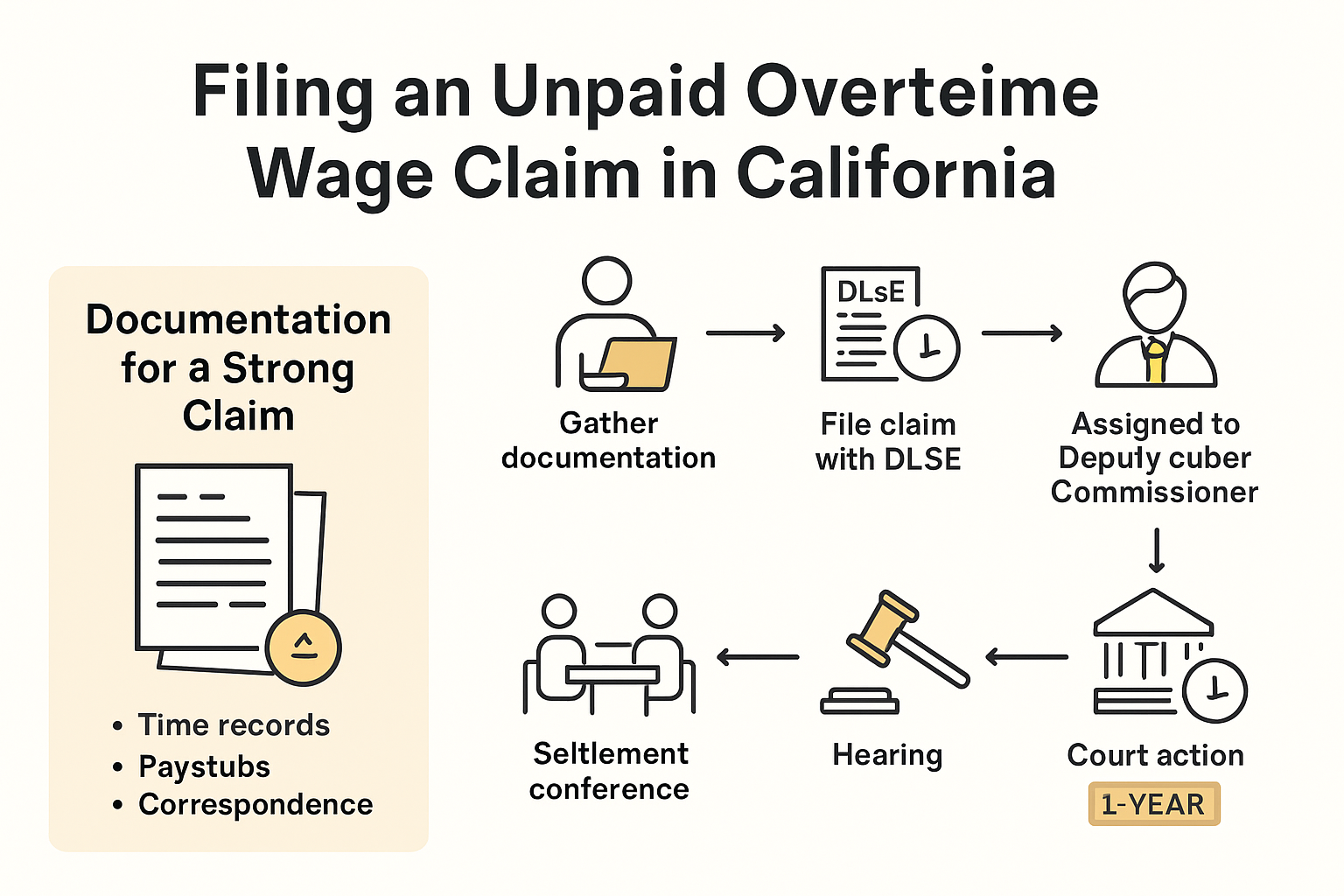
Here’s a helpful table outlining the step-by-step DLSE wage claim process to clarify what employees can expect:
| Step | Description |
|---|---|
| 1. File Claim | Submit wage claim to DLSE |
| 2. Case Assignment | Claim is assigned to Deputy Labor Commissioner |
| 3. Settlement Conference | Possible meeting to resolve the issue informally |
| 4. Formal Hearing | If unresolved, case proceeds to administrative hearing |
| 5. Decision & Enforcement | Decision issued; enforcement actions may follow if employer noncompliant |
Documentation and Evidence Gathering
Successful wage recovery and wrongful termination claims hinge on comprehensive evidence collection. Employees should systematically gather and preserve:
- Detailed work records and timesheets
- Employment contracts and offer letters
- Communication documentation with employers
- Performance evaluations
- Witness statements from coworkers
The California Labor Commissioner’s Office emphasizes that employees cannot waive their right to overtime compensation. Any agreement attempting to circumvent legally mandated wage protections remains unenforceable.
Workers in cities like Ontario, Pomona, and Rancho Cucamonga experiencing wage theft or wrongful termination should act promptly. Time limitations exist for filing claims, making immediate action crucial. Professional legal consultation can help workers navigate complex employment law challenges, assess the strength of their case, and determine the most effective strategy for recovering unpaid wages or challenging improper termination.
Understanding your rights and the intricate procedures for wage recovery represents the first critical step in protecting your professional interests and ensuring fair treatment in the workplace.

Frequently Asked Questions
What are the overtime pay rates in California for 2025?
In California, employees earn 1.5 times their regular hourly wage for hours worked over 8 in a single workday or over 40 hours in a workweek. Employees earn double their regular pay for hours worked beyond 12 in a workday or over 8 hours on the seventh consecutive workday.
Who is exempt from overtime pay under California law?
Certain employees may be exempt from overtime pay based on their job duties and salary levels, including executive, administrative, and professional roles, some computer software professionals, and certain commissioned sales employees.
How can I document my hours worked to protect my overtime pay claims?
To protect your overtime claims, keep meticulous records of your hours worked, including start and end times, and any unpaid work performed off the clock. Documentation should include timesheets, communication with employers, and other evidence that demonstrates the hours you’ve worked.
What should I do if I believe my employer violated my overtime pay rights?
If you believe your employer has violated your overtime rights, document all hours worked and gather any relevant evidence. It is advisable to seek legal counsel who can guide you through the process of filing a wage claim or pursuing legal action for unpaid wages.
Protect the Overtime Pay You Deserve in 2025
Are you worried your employer is not following the new California Overtime Pay Rules for 2025? Many employees lose thousands because they misunderstand exemptions, do not track hours closely, or face wage theft. Missing out on double time after long shifts or falling victim to misclassification can directly affect your income and financial stability. If you suspect your overtime rights are being ignored or your employer has made mistakes in your pay, you are not alone. Our firm knows how overwhelming it feels to challenge an employer, especially when documentation and legal details matter so much.
You do not have to let these overtime violations go unpaid. Visit our Unpaid Wages and Overtime page for practical steps and trusted legal support, or learn more about your broader rights at Huprich Law Firm. Take the first step now. Secure your earnings and make sure your overtime hours count. Connect with our experienced California employment attorneys today.
Recommended
- Overtime Laws in California 2025: You Need To Know This
- California Wage Theft Laws 2025 You Need To Know
- Employment Law Basics 2025: What You Need To Know
- Your Rights to Unpaid Wages California: What You Need To Know
- Office Relocation Planning 2025: Guide For California Moves | USPL - US Pro Logistics
https://huprichlaw.com/california-overtime-pay-rules-2025/?fsp_sid=1942


Comments
Post a Comment