What is Wrongful Termination: You Need To Know This

Wrongful termination is not just about losing a job. About 46 percent of employees who face wrongful termination also report severe emotional distress and financial strain. Most people think getting fired is the end of the story. Turns out, it can be just the beginning of a much bigger legal and personal battle with lasting consequences.
Table of Contents
- Defining Wrongful Termination And Its Importance
- Key Principles Of Employment Law Related To Termination
- Federal And State Legal Framework
- Protected Categories And Prohibited Reasons For Termination
- Implied Contractual Rights And Public Policy Exceptions
- How Wrongful Termination Affects Employees And Employers
- Psychological And Professional Impact On Employees
- Financial And Legal Consequences For Employers
- Broader Organizational And Societal Implications
- Recognizing Signs Of Wrongful Termination
- Clear Red Flags In Termination Circumstances
- Contextual Evidence Of Potential Wrongful Termination
- Gathering Supporting Documentation
- Legal Remedies And Support For Wrongful Termination
- Types Of Legal Compensation And Remedies
- Filing Administrative And Legal Claims
- Statute Of Limitations And Legal Considerations
Quick Summary
| Takeaway | Explanation |
|---|---|
| Wrongful termination violates employee rights. | Employees can be fired for illegal reasons, such as discrimination or retaliation, which undermines their legal protections. |
| Understand legal protections against wrongful termination. | Familiarize yourself with federal and state laws that protect against unjust dismissal, helping to safeguard your job. |
| Recognize signs of wrongful termination. | Look for warning signs, such as dismissals after complaints or inconsistent termination explanations, to identify potential violations. |
| Document everything if you suspect wrongful termination. | Keep records of communications and performance reviews to support any claims of discrimination or retaliation against you. |
| Seek legal remedies and know filing options. | Explore various legal pathways, including filing a complaint or lawsuit, to reclaim lost wages or seek reinstatement after wrongful termination. |
Defining Wrongful Termination and Its Importance
Wrongful termination represents a serious violation of an employee’s legal rights, occurring when an employer fires a worker for illegal reasons that breach employment laws or public policy. Unlike standard job separations, wrongful termination involves specific circumstances that transform a routine dismissal into an actionable legal claim. Explore the details of unlawful termination to understand the nuances of workplace protection.
What Constitutes Wrongful Termination
At its core, wrongful termination happens when an employee is fired for reasons that violate federal or state employment laws. These reasons can include:
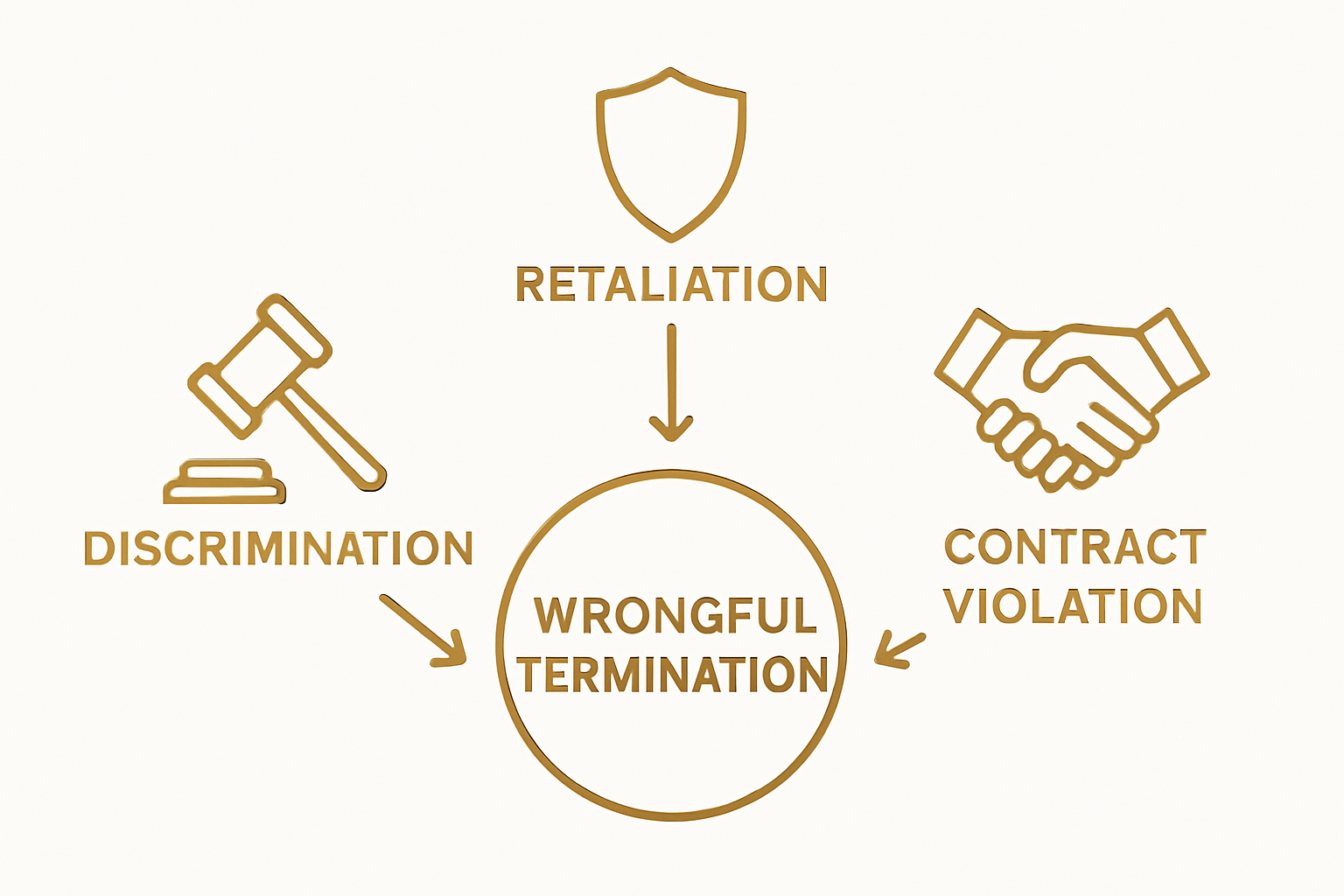
- Discrimination based on protected characteristics like race, gender, age, disability, or national origin
- Retaliation for reporting workplace harassment or safety violations
- Termination that violates written or implied employment contracts
- Firing an employee for refusing to perform illegal activities
- Dismissal that goes against public policy principles
Legal Protections and Employee Rights
California law provides robust protections for employees facing unjust termination.
 According to the U.S. Department of Labor, workers have fundamental rights that shield them from arbitrary or discriminatory dismissal. Employers cannot terminate employees for reasons that violate established legal standards, which means workers have recourse when their employment is wrongfully ended.
Wrongful termination is more than just an unfair job loss. It represents a fundamental breach of professional trust and can have significant economic and emotional consequences for workers. Employees who experience such termination may be entitled to remedies including lost wages, reinstatement, compensation for emotional distress, and potential punitive damages against the employer.
Understanding your rights is the first step in protecting yourself from workplace injustice. By recognizing the signs of wrongful termination, employees can take decisive action to defend their professional dignity and seek appropriate legal recourse.
Key Principles of Employment Law Related to Termination
Employment law establishes critical protections for workers, defining the boundaries within which employers can legally terminate an employee’s contract.
The following table summarizes major federal and California state legal protections against wrongful termination, clarifying the purpose and scope of each law for employee rights.
| Law/Act | Coverage/Scope | Protection Provided |
|---|---|---|
| Title VII of the Civil Rights Act | Federal: All U.S. employees | Protects against discrimination based on race, color, religion, sex, national origin |
| Americans with Disabilities Act (ADA) | Federal: Most U.S. employees | Prohibits firing due to disability; requires reasonable accommodations |
| Age Discrimination in Employment Act | Federal: Employees age 40+ | Protects against age-based termination for workers age 40 or older |
| California Fair Employment and Housing Act | State: California | Prohibits discriminatory and retaliatory firing based on multiple protected categories |
| Whistleblower Protection Laws | Federal & State | Protect employees from termination for reporting legal or safety violations |
| These legal principles are designed to prevent arbitrary, discriminatory, and retaliatory dismissals that undermine worker rights. Learn more about employment rights under state and federal law. |
Federal and State Legal Framework
Employment laws at both federal and state levels provide comprehensive protections against unjust termination. The primary legal mechanisms safeguarding employee rights include:
- Title VII of the Civil Rights Act
- Americans with Disabilities Act (ADA)
- Age Discrimination in Employment Act (ADEA)
- California Fair Employment and Housing Act
- Whistleblower Protection Laws
Protected Categories and Prohibited Reasons for Termination
According to the Equal Employment Opportunity Commission, employers cannot terminate employees based on specific protected characteristics or in retaliation for legally protected activities. These protected categories include:
- Race, color, national origin
- Religious beliefs
- Gender and sexual orientation
- Age (for workers over 40)
- Pregnancy status
- Disability or medical condition
- Military service
Implied Contractual Rights and Public Policy Exceptions
Beyond explicit discrimination protections, employment law recognizes additional nuanced principles that shield workers from wrongful termination. Implied contractual rights emerge from employee handbooks, verbal assurances, and established workplace practices. Public policy exceptions prevent employers from firing workers who refuse to engage in illegal activities or who exercise fundamental legal rights like filing workers compensation claims or reporting workplace safety violations.
Understanding these legal principles empowers employees to recognize potential violations and take appropriate action to protect their professional interests and personal dignity.
How Wrongful Termination Affects Employees and Employers
Wrongful termination creates profound consequences that extend far beyond the immediate job loss, impacting both employees and employers in complex and lasting ways. Learn more about the comprehensive impact of wrongful termination to understand the full scope of these implications.
Psychological and Professional Impact on Employees
According to the American Psychological Association, losing a job through wrongful termination can trigger significant emotional and professional disruptions. The psychological consequences are often severe, including:
- Increased stress and anxiety about future employment
- Potential development of depression and low self-esteem
- Disruption of professional career trajectory
- Financial instability and economic uncertainty
- Challenges in obtaining future employment references
Financial and Legal Consequences for Employers
Employers who engage in wrongful termination face substantial risks beyond immediate legal challenges. The potential financial penalties can be significant, including:
- Mandatory compensation for lost wages and benefits
- Potential punitive damages
- Legal fees and court expenses
- Potential reputation damage and reduced employee morale
- Increased scrutiny from regulatory agencies
Broader Organizational and Societal Implications
Wrongful termination cases represent more than individual disputes they reflect systemic workplace issues that can undermine organizational integrity and broader employment standards. These cases serve as critical mechanisms for enforcing fair employment practices, compelling organizations to develop more transparent, equitable workplace policies and fostering a culture of respect and professional accountability.
Ultimately, understanding the multifaceted impacts of wrongful termination helps both employees and employers recognize the importance of maintaining ethical, lawful workplace practices that protect individual rights and organizational interests.
Recognizing Signs of Wrongful Termination
Identifying potential wrongful termination requires careful analysis of the circumstances surrounding an employee’s dismissal. Learn more about employee rights and workplace protections to understand the nuanced indicators of illegal employment practices.
Clear Red Flags in Termination Circumstances
Certain patterns and behaviors can signal a potential wrongful termination. According to the National Labor Relations Board, employees should be vigilant about the following warning signs:
- Termination immediately following a complaint about workplace discrimination
- Dismissal after requesting reasonable accommodations for a disability
- Firing that occurs after reporting sexual harassment or unsafe working conditions
- Sudden job loss after discussing unionization or worker rights
- Inconsistent or changing explanations for the termination
Contextual Evidence of Potential Wrongful Termination
Documenting the context of your termination is crucial for building a potential legal case. Key contextual indicators include:
- Significant deviation from standard company termination procedures
- Discriminatory language or behavior preceding the dismissal
- Replacement by an employee outside a protected class
- Termination that violates explicit promises in employment contracts
- Pattern of similar terminations targeting specific groups of employees
Gathering Supporting Documentation
Employees suspecting wrongful termination should meticulously collect evidence. This includes performance reviews, email communications, witness statements, and a detailed timeline of events leading to dismissal. Contemporaneous documentation can provide critical proof of discriminatory or retaliatory intent.
Recognizing the signs of wrongful termination empowers employees to protect their professional rights and seek appropriate legal recourse when workplace injustices occur.
This table presents common signs and contextual factors that may indicate wrongful termination, providing a quick reference to help employees recognize red flags in their dismissal experience.
| Warning Sign or Context | Description |
|---|---|
| Termination after a workplace complaint | Fired shortly after reporting discrimination or harassment |
| Dismissal after requesting accommodation | Fired for asking for disability-related adjustments |
| Inconsistent reasons for firing | Shifting or unclear explanations from employer |
| Violation of standard procedure | Termination not following normal company policy |
| Replacement outside protected class | Fired and replaced by someone not in the same protected category |
| Contract or handbook violation | Fired despite assurances in written/verbal agreements |
| Pattern targeting specific group | Multiple similar terminations within same protected group |
Legal Remedies and Support for Wrongful Termination
Employees who have experienced wrongful termination have multiple legal pathways to seek justice and compensation. Our comprehensive guide to filing employment claims provides detailed insights into navigating these complex legal processes.
Types of Legal Compensation and Remedies
Wrongful termination claims can result in several forms of compensation and potential reinstatement. According to the Equal Employment Opportunity Commission, employees may be eligible for:
- Back wages and lost compensation
- Front pay for future earnings
- Reinstatement to previous position
- Compensatory damages for emotional distress
- Punitive damages in cases of egregious misconduct
- Legal fees and court costs
Filing Administrative and Legal Claims
Employees have multiple channels for pursuing wrongful termination claims. The typical process involves:
- Filing a complaint with the Equal Employment Opportunity Commission (EEOC)
- Submitting a claim with California’s Department of Fair Employment and Housing
- Initiating a civil lawsuit in state or federal court
- Pursuing administrative hearings or mediation
- Negotiating potential settlements with employer
Statute of Limitations and Legal Considerations
Time is a critical factor in wrongful termination cases. California law establishes specific timelines for filing claims, which vary depending on the nature of the violation. Federal claims typically require filing with the EEOC within 180 days of the termination, while state claims under California law may have longer periods.
Navigating wrongful termination claims requires strategic legal guidance, thorough documentation, and a clear understanding of your rights. Professional legal representation can significantly improve the likelihood of achieving a favorable resolution.
Take the Next Step if You Suspect Wrongful Termination
Losing your job unfairly can leave you feeling uncertain and overwhelmed. This article highlights just how important it is to recognize signs like discrimination, retaliation, or violation of employment contracts. If you believe your dismissal was based on illegal reasons and you are searching for clarity or support, you are not alone. Our attorneys know how devastating it feels when your professional reputation and financial stability are put at risk.
Let us help you protect your future and restore your confidence. Visit our Wrongful Termination page to discover how our team fights for the rights of individuals in your situation. You can also learn more about related issues on our Retaliation page. Reach out today at Huprich Law Firm to schedule a confidential consultation and start the journey toward justice. Do not wait. The sooner you act, the stronger your case may be.
Frequently Asked Questions
What is wrongful termination?
Wrongful termination occurs when an employer fires an employee for illegal reasons that violate employment laws or public policy, such as discrimination or retaliation.
What are some examples of wrongful termination?
Examples include firing someone based on their race, gender, or disability, retaliation for reporting workplace harassment, and firing an employee for refusing to engage in illegal activities.
What legal protections exist for employees against wrongful termination?
Employees are protected by federal and state laws, including the Civil Rights Act, Americans with Disabilities Act, and whistleblower protection laws, preventing termination for discriminatory reasons or legal activities.
How can an employee identify signs of wrongful termination?
Employees should look for red flags like sudden dismissal after reporting harassment, inconsistent explanations for termination, or deviation from standard company termination procedures.
Recommended
- What Is Unlawful Termination? What You Need To Know.
- Important Facts You Must Know About Wrongful Termination
- Wrongful Termination Lawyer in California
- How To File a Wrongful Termination Claim in California
https://huprichlaw.com/understanding-what-is-wrongful-termination/?fsp_sid=1701


Comments
Post a Comment